Leaders from the private sector and timber industry are calling for the construction sector to prioritise the sustainable use of Solomon Islands timber in construction, saying the move could unlock economic benefits for local communities and reduce reliance on imports.
At a roundtable supported by the Solomon Islands Chamber of Commerce and Industry (SICCI) and the Australian Government, representatives explored practical steps to strengthen the timber supply chain.
SICCI CEO, James Dolarii, said mandating the use of local materials would benefit local resource owners.


“Let’s reduce our reliance on overseas resources and increase the value of our local assets for resource owners and local business,” Mr Dolarii said.
“Currently most of our timber is exported with no value added, which does not bring the greatest economic benefit to the country. We look forward to working with government in the new year to introduce local content requirements.”
The discussion highlighted how proper management, selection, milling and drying would increase the volume and value of structural timber, keeping more money in the local economy.
Acting Australian High Commissioner Andrew Schloeffel reinforced the economic benefits of using local materials.

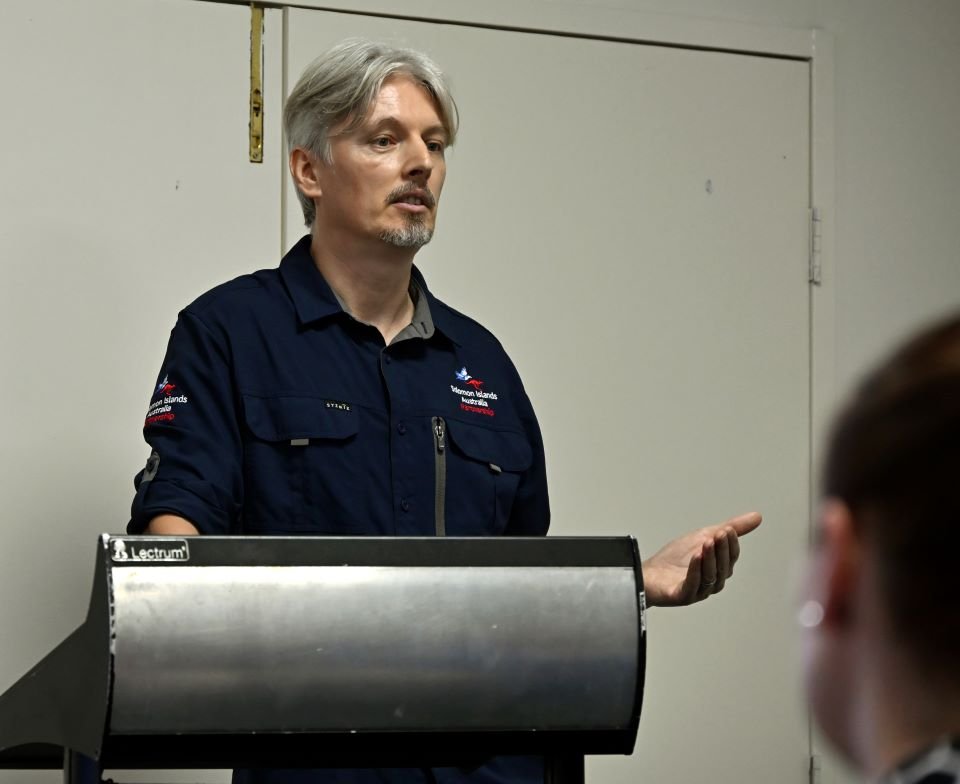
“Every time we choose local timber, we strengthen communities and create jobs,” Mr Schloeffel said.
“The more local content in infrastructure, the greater the economic return to Solomon Islanders.”
“Independent research shows that for every dollar Australia invests in infrastructure here, around $2.50 flows back into the local economy through contractors, suppliers, and wages.”
Mr Dolarii said the new National Building Code creates opportunities for local suppliers to provide more local timber, aggregate and other local resources for construction.
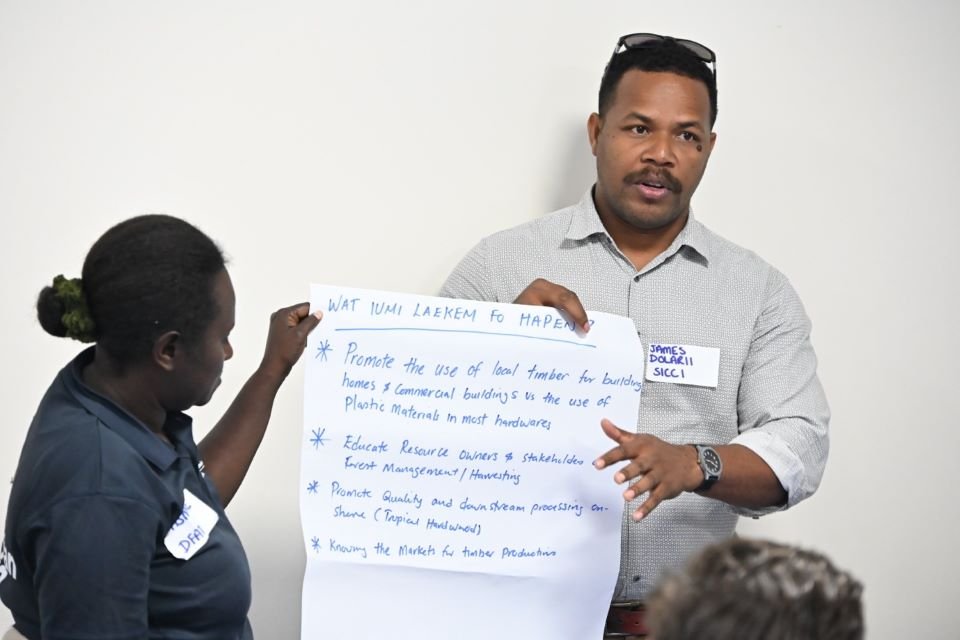
“This requires us to rethink how we deliver infrastructure, from designs that utilise local materials, training and regulations for sustainable harvesting and forestry management, and certified quality timber processing,” Mr Dolarii said.