Six clinicians from the National Referral Hospital (NRH) in Honiara are now deep into their clinical training at the Affiliated Hospital of Guizhou Medical University after arriving in China. Five are on a six-month attachment and one on a three-month placement, forming the second cohort under the China-Solomons Urology Minimally Invasive Surgery Centre Program.

Since their arrival on 22 September, the host hospital has given the group a warm welcome and careful orientation to its layout, clinical departments and electronic information system, and assigned each trainee a specialist mentor for one-on-one coaching.
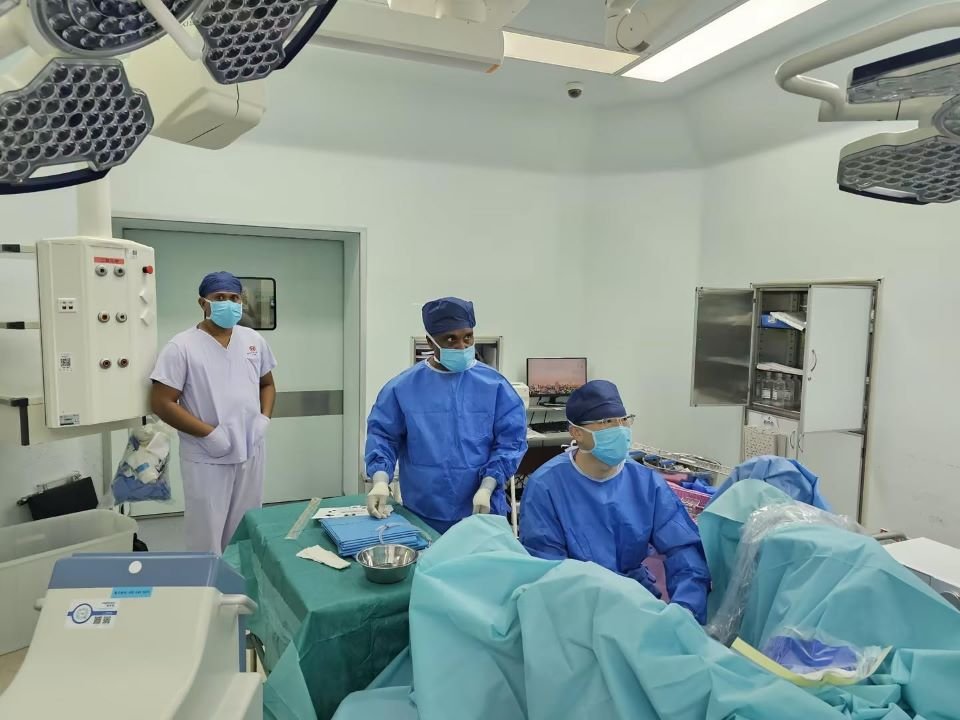
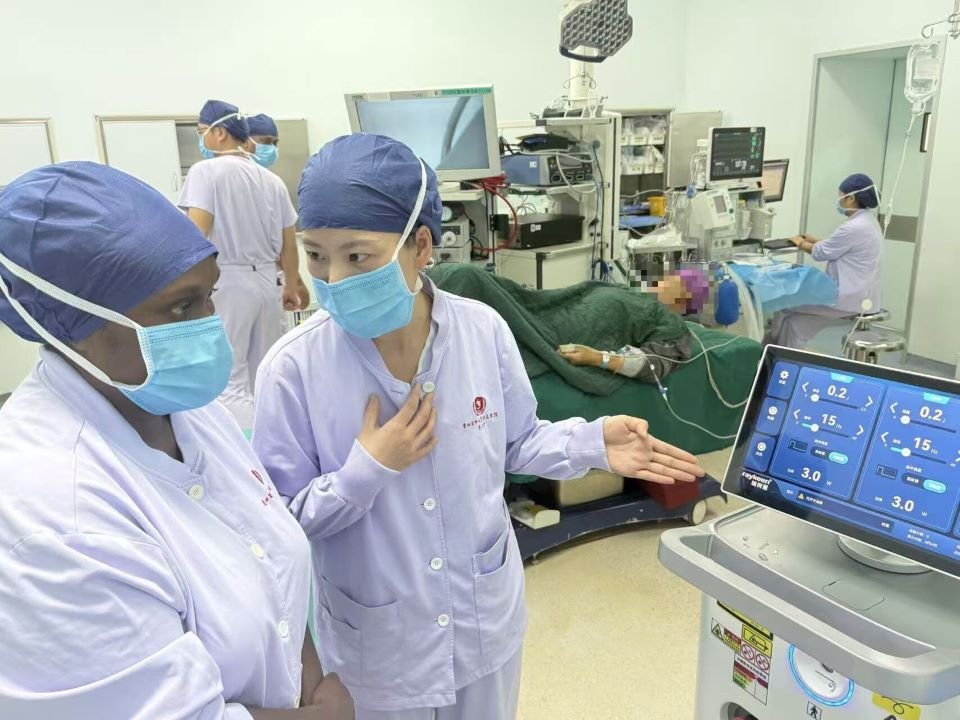
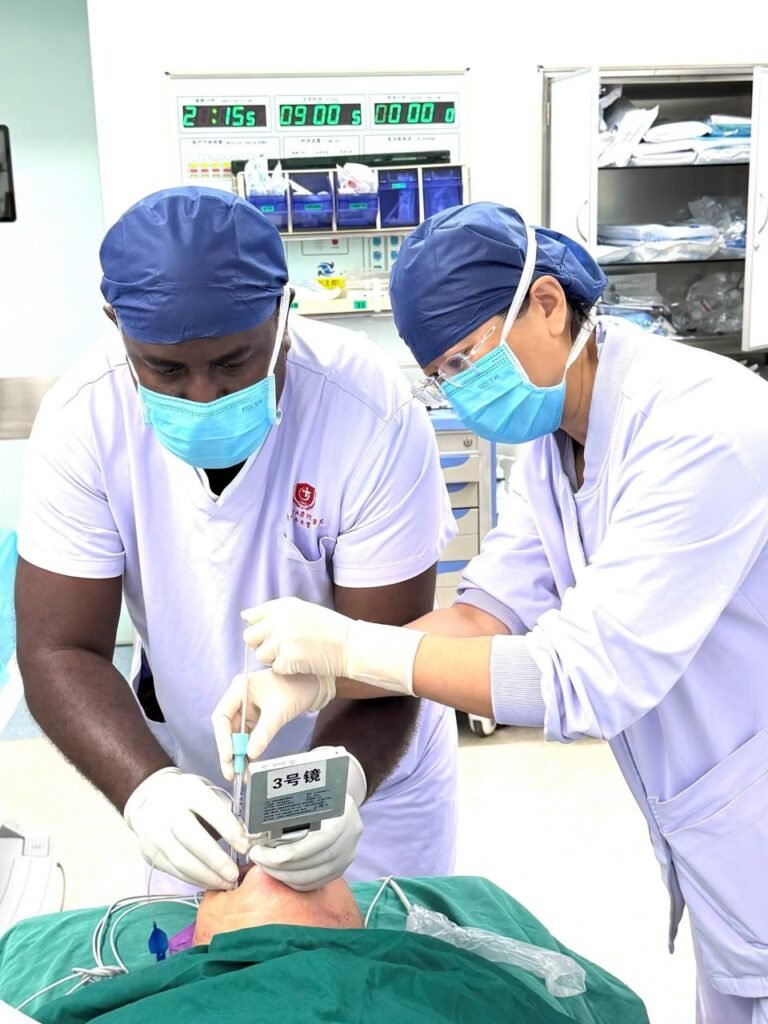
The trainees are now moving into hands-on specialty rotations — through ward rounds, clinics, operating theatres and simulation labs — covering urologic and neuro minimally invasive surgery, anesthesiology, laboratory, peri-operative nursing and wound care, matched to what the NRH will need when the team returns home.
One team, six specialties

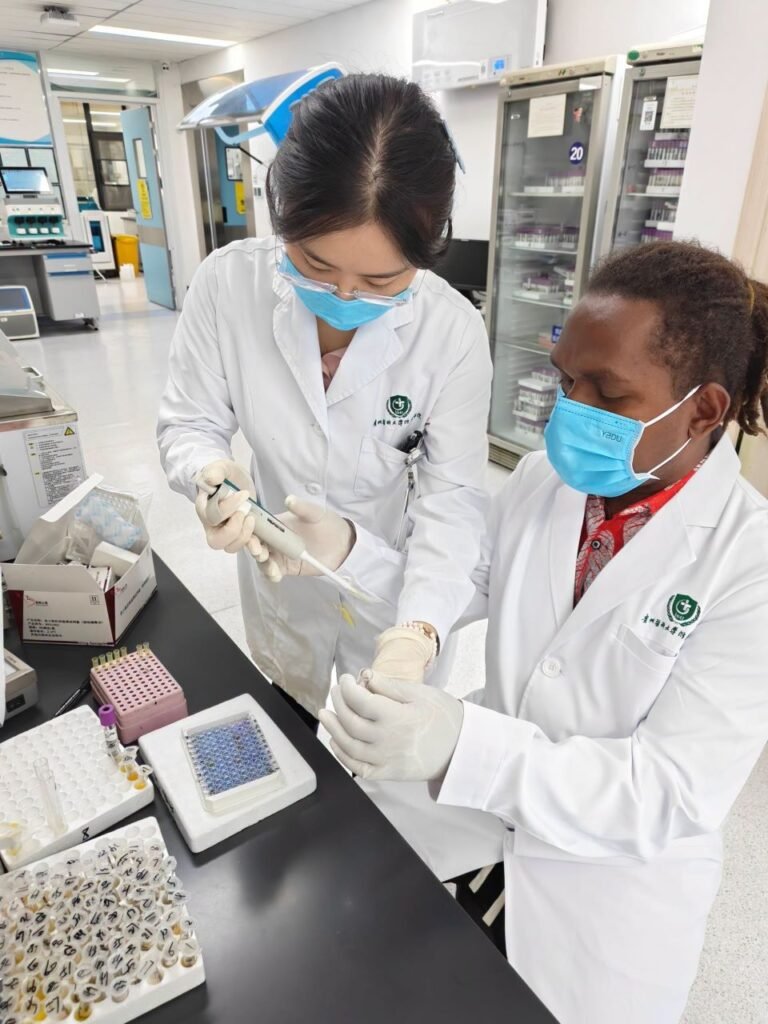

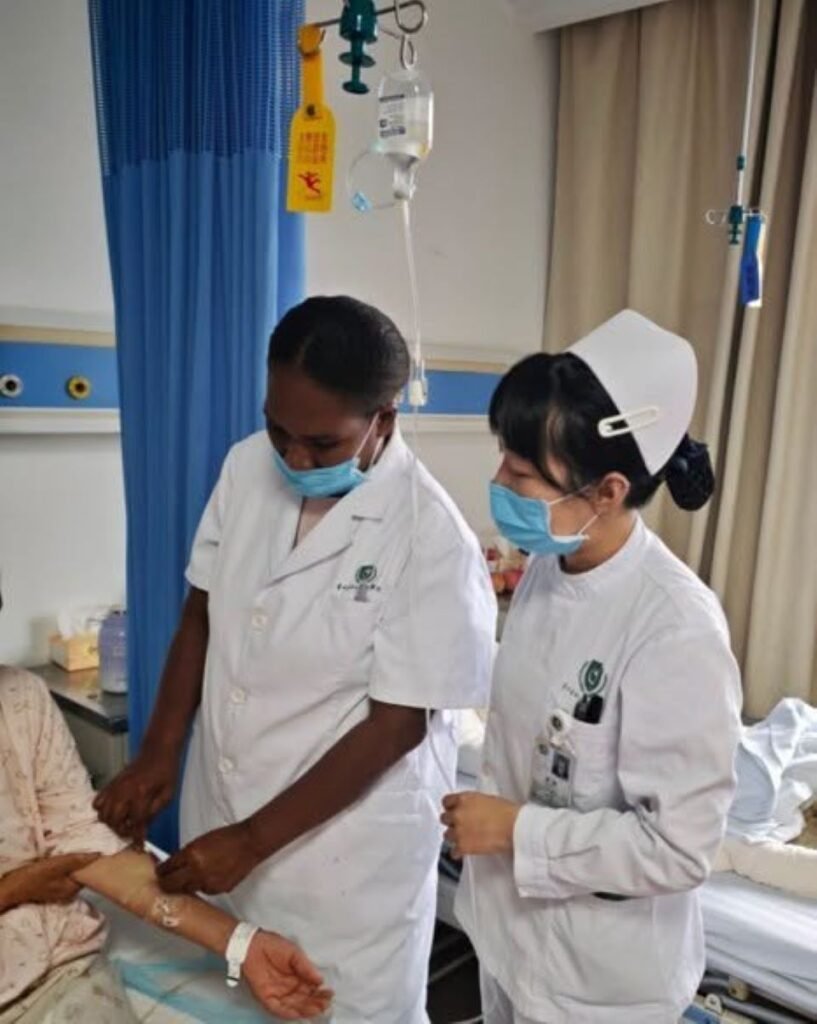
The six-strong group is led by Dr Denton Aota of the NRH General Surgery Department. He is joined by Dr Rocky Levao (also general surgery), Dr Deanray Mark (anaesthesiology), Jarod Bobby (medical laboratory), Melanie Maeletete (operating room nursing) and Yolanda Bouro (surgery ward nursing). They are the full peri-operative team required to run a new service back in Honiara, rather than sending individuals to watch operations in isolation. A team, not individuals.
“Not a sightseeing trip”
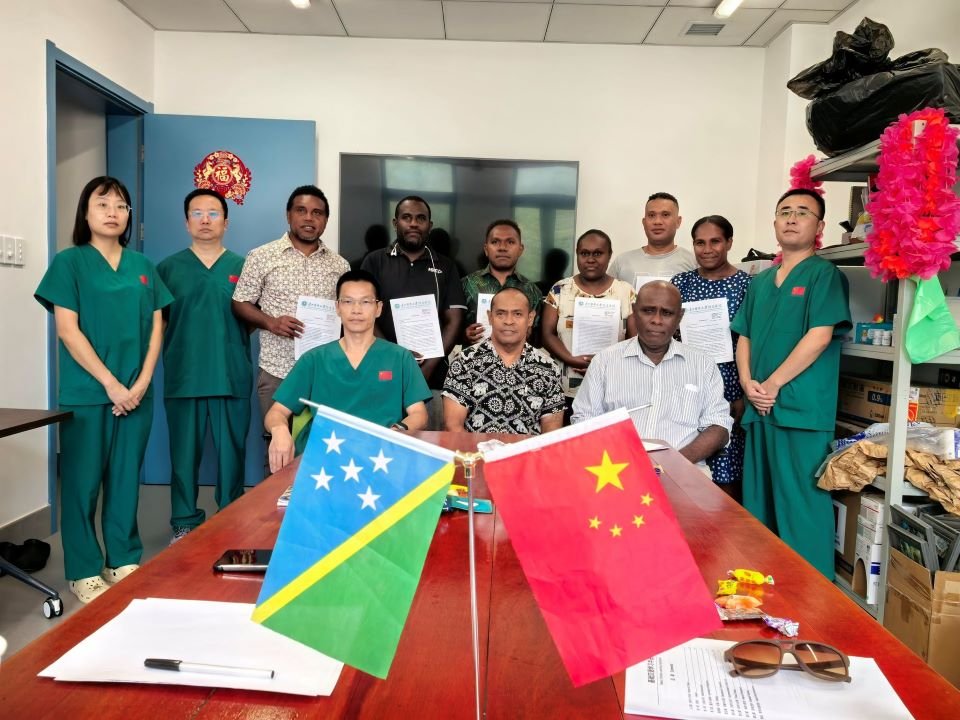
Before they left Honiara, the NRH and the Chinese medical team jointly hosted a farewell ceremony, and the trainees also received a session on everyday conversational Chinese from interpreter Wang Zhangrong.
NRH chief executive officer George Malefoasi told the group the attachment was a key part of the hospital’s plan to lift specialist care in surgery, neurology and cardiology, and urged them to study digital health, laparoscopy, imaging and computerized clinical. He urged them to treat the opportunity seriously. “You will find there is a lot of difference in how we treat and manage patients here versus in China — the level of sophistication out there is high, and that is what we want you to go and observe,” he said. He singled out digital health as a priority area of observation and told the trainees to study how medical information system works in practice.
Head of surgery Dr Rooney Jagilly said: “You are going to China first and foremost as trainees — this is not a sightseeing trip,” he said, urging them to “observe not just operations but the entire health system — hospital structure, teamwork, infection-prevention standards and standardized clinical pathways — to keep a daily notebook, and to think about which practices can be adapted to the Solomon Islands.” “Upon your return, each of you will share what you have learned and how we can improve care at home.”
Dr.Chu Liangzhao, leader of the 5th China Medical Team, framed the attachment as “teaching people how to fish.” “We are confident you will bring back new techniques, new concepts and new ways of working, and become the backbone of medical development here,” he said. “Distance never separates hearts that are close. China-Solomons cooperation is not an abstract concept hanging in the air, too distant to see or touch — it lives in the details of every exchange of people, every connection between hearts.”
The first cohort of nine returned home last year, independently performing holmium laser lithotripsy and other minimally invasive procedures — several urologic “firsts” for the Solomon Islands — and running the NRH’s dedicated urology ward and Comprehensive Medical Center theatre under the assistance of Chinese medical team. This second cohort aims to widen that capability across the supporting disciplines.
When the six return, they will bring back not just new techniques, but a complete team ready to put them to work at the NRH. This will raise the professional competency of NRH medical staff and help better safeguard the health of Solomon Islanders.