BY PROFESSOR TRANSFORM AQORAU, VICE CHANCELLOR, SOLOMON ISLANDS NATIONAL UNIVERSITY
The proposal for a Free Education Policy is an important national conversation for Solomon Islands. At its heart, it speaks to one of the most powerful aspirations of any country: that every child, young person and adult learner should have a fair opportunity to learn, to acquire skills, and to contribute meaningfully to national development.
Education is not simply a private benefit. It is a national investment. When more Solomon Islanders are educated, trained and skilled, families benefit, communities benefit, employers benefit, and the country benefits. A well-designed Free Education Policy can help reduce the financial burden on parents, open doors for students from poorer and rural communities, and strengthen the human capital base needed for our future.
But as we welcome this conversation, it is also important to recognise its different shades and implications.
Free education does not mean education has no cost. It means that costs currently carried by students, parents, guardians, sponsors, employers or communities are shifted, in whole or in part, to Government or another funding source. The real question is therefore not only whether education should be free. The practical question is: free for whom, at what level, covering which costs, and funded in what way?
This distinction matters.
Free education could mean Government pays tuition fees only. It could mean tuition plus registration and other student fees. It could include learning materials, practical costs, fieldwork, laboratory costs and student support. It could go further and include accommodation, meals, transport, internet access, uniforms, tools and other costs that students and families currently meet. At the institutional level, it could also mean funding the full cost of delivering education, including staff, utilities, ICT, libraries, laboratories, classrooms, maintenance, student services and capital infrastructure.
Each of these options has different implications.
For Solomon Islands National University, this is especially important. SINU is the national university. It has a responsibility to support national development and to expand access to tertiary education, technical education and professional training. But access and quality must move together. If more students enter the system, the University must also have the lecturers, classrooms, laboratories, workshops, accommodation, internet capacity, utilities, library resources and student support services required to serve them properly.
A free education policy that is properly costed and sustainably funded can be transformative. It can allow more young people from the provinces to study. It can reduce the burden on families. It can help build teachers, nurses, engineers, accountants, scientists, marine specialists, agriculturalists, tradespeople, public servants and entrepreneurs. It can support national productivity and social mobility.
At the same time, if the policy is not carefully designed, institutions may face pressure. There may be more students than facilities can support. Classes may become overcrowded. Laboratories may lack materials. Accommodation may become insufficient. Payments may be delayed. Universities and schools may be expected to deliver more without the full resources required to maintain quality.
This is why planning is so important.
In the case of SINU, student fees are a major part of the University’s recurrent revenue. If those fees are removed, they would need to be replaced through a predictable and reliable funding mechanism. If the policy also covers accommodation, dining, transport or other student-related costs, then the financial implications become even larger. If enrolment expands, there will also be additional costs for staffing, infrastructure, ICT, student services and maintenance.
There is also an equity issue. If free education only removes tuition, some students may still be unable to attend because they cannot afford accommodation, meals, transport, data, laptops, stationery, tools or the cost of relocating from rural areas to Honiara or another campus. For many families, there are also opportunity costs when a young person studies full time rather than helping with gardening, fishing, marketing, household work or paid employment. So the meaning of “free” must be carefully considered from the perspective of real families, not only from the perspective of institutional fee schedules.
This does not mean the policy should not be supported. On the contrary, the objective of expanding access to education is important and deserves strong national support. But good policy requires good design. It requires accurate costing, reliable financing, clear eligibility rules, proper phasing, strong data systems, accountability, and realistic implementation timelines.
For SINU and other education providers, the key is to engage constructively. The conversation should not be framed as opposition to free education. It should be framed as a shared responsibility to make free education work.
A practical approach would be to model different scenarios. What would it cost if Government covered tuition only? What if it covered all student fees? What if learning materials and practical costs were included? What if accommodation and meals were included? What if the policy led to a major increase in enrolment? What capital investment would be needed for classrooms, laboratories, workshops, hostels, staff offices and ICT systems?
These are not political questions only. They are planning questions. They are budget questions. They are quality assurance questions. They are national development questions.
The success of a Free Education Policy will depend on whether access, quality and sustainability are treated as parts of the same equation. Free education should not mean unfunded education. It should not mean weakened education. It should mean better access, properly supported institutions, stronger learning outcomes and a more skilled nation.
Solomon Islands has an opportunity to shape a policy that is ambitious, fair and realistic. To do that, Government, education institutions, communities, students, parents, development partners and employers all need to be part of the discussion.
Education is one of the most important investments a country can make. If we are serious about free education, we must also be serious about funding it properly, implementing it carefully, and protecting the quality of learning for every student.
That is the conversation we need to have: not whether education matters, because it clearly does, but how we can make access wider, quality stronger, and financing sustainable for the long term.


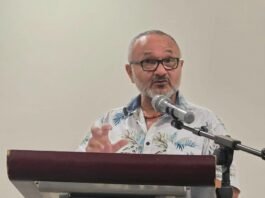
Disclaimer: The private view expressed in this article is written by Professor Transform Aqorau is the Vice Chancellor of the Solomon Islands National University (SINU). He is a renowned legal and policy expert on ocean governance, fisheries management, and the sustainable use of marine resources in the Pacific. Over the course of his career, Professor Aqorau has held senior advisory roles with the Pacific Islands Forum Fisheries Agency, the Parties to the Nauru Agreement, and the Solomon Islands Government, among others. He has been instrumental in advancing regional cooperation on tuna fisheries management and is a leading voice on climate ocean policy and governance interlinkages in the Indo Pacific. He holds a PhD in International Law from the University of Wollongong and has published widely on fisheries law, ocean diplomacy, and Pacific regionalism. Professor Aqorau is deeply committed to ensuring that institutions of higher learning contribute actively to sustainable development and climate resilience in the Pacific.