BY JOY OFASIA
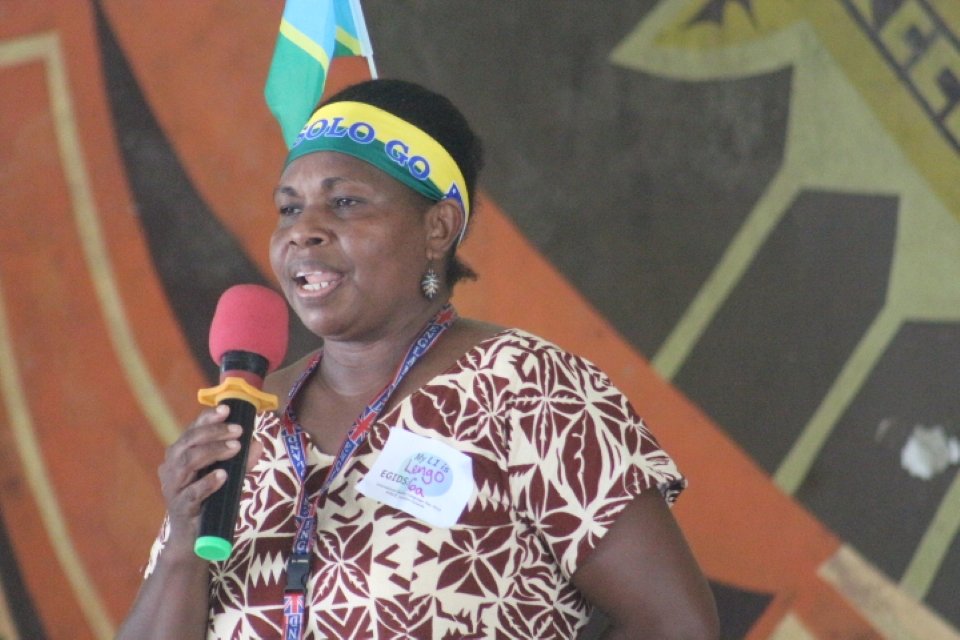
GEORGINA Buro Pitaqae, head of the Language and Communications department at the Solomon Islands National University (SINU), highlighted the significance of knowing the mother native languages in the Solomon Islands.
The lecturer in English Literacy told SUNDAY ISLES about the importance of celebrating International Mother Tongue Language Day, citing the importance of teaching our children to learn and know about the diverse native languages in the country.
“As a lecturer at SINU, I want to ensure that the mother tongue is maintained for all generations. Is the first language you use growing up? You use it to communicate and interact and to develop as a human being your cultural knowledge and your way of life in the community.
“This day is an important day for me as a lecturer, because what I am teaching here at SINU theories and research is a real issue, and we need to build it up through the teachers, passing in the knowledge so that it will be carried on to the teaching careers of the learners out there.
“These can be a means to acquire knowledge and skills through the culture. Language speaks to culture. To ensure that the next generation is educated holistically in terms of cultural knowledge and full development. They need to be educated in that language as well,” Georgina said.
As a lecturer, she is also aware of the difficulties that the students encounter.
“The challenge we face today as teachers is getting to see children who don’t know their mother tongues. They tend to use pidgin as their mother tongue, and we don’t blame them,” Georgina said.
She said that this is because people are coming out of intermarriages, which causes them to use pidgin as their main language.
“Children, when asked to speak their mother tongue, shy away or maybe feel embarrassed. Solomon Islanders need to know that pidgin has become another language and that we must embrace this heritage because, for us Solomon Islanders, the pidgin language has become part of our identity.
Georgina also posed a question, asking how we can ensure that we improve English literacy through the mother tongue.
“The Ministry of Education has policies that guide the teaching of English through the mother tongue. How to do it depends on the availability of resources. Do we have books that are written in mother tongue languages? Will that enable all Solomon Islanders to make a smooth transition from their mother tongue to English or not? That is the question. We invite everybody to embrace the challenge and become readers and writers to advocate for their mother tongue.”
She encouraged Solomon Islanders to embrace who they are and celebrate Mother Language Day with appreciation that God has given us all the languages to embrace and use so that we can continue to promote unity, harmony, and peace to maintain the knowledge and cultures of our community.
“If you don’t know your history and your language, then you don’t know where you are coming from.”