BY JOY OFASIA
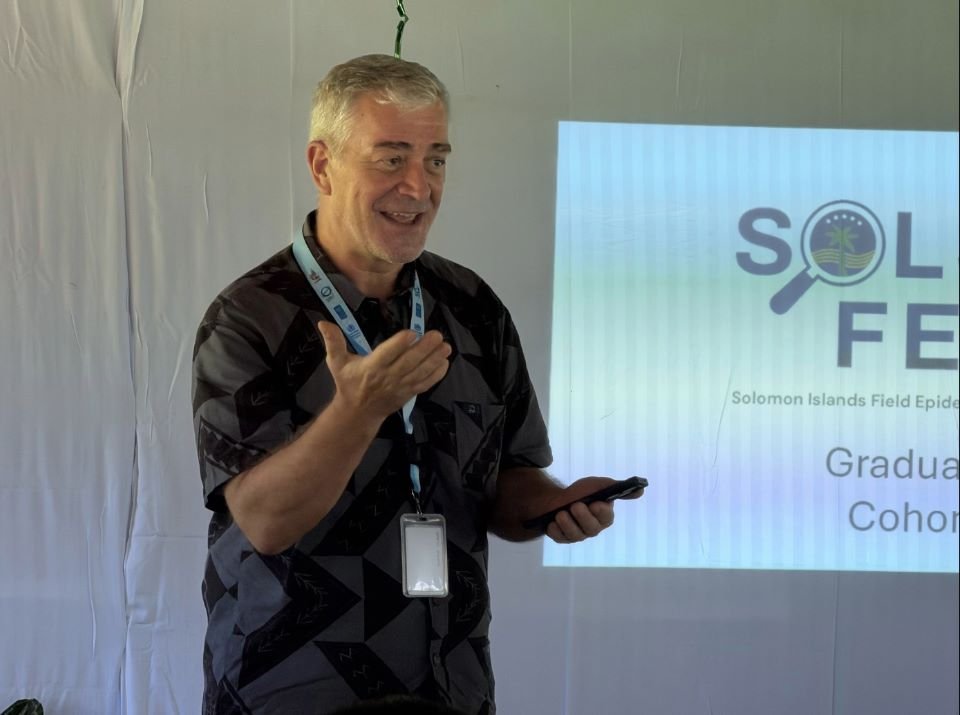
At the third graduation ceremony of the Field Epidemiology Training Program in Solomon Islands, Georgios Theocharopoulos reminded new graduates that their journey is only starting.
The ceremony celebrated not just academic success, but also a stronger future for public health in Solomon Islands. Fellows in this cohort completed projects addressing health priorities, including improving information collected about malaria, investigating skin abscesses and the use of traditional medicine, strengthening management of syringes and other sharps in hospitals, supporting the use of computer programs to analyse health data, and strengthening early warning systems for detecting disease outbreaks in Solomon Islands.
For the first time, participants also took part in a full-day outbreak simulation, applying their skills in a realistic emergency scenario involving health facilities and community stakeholders.
Speaking to nurses and public health officers, he said the training has prepared them with skills that many others do not have. “This is the beginning of your work,” he said. “Now you are better equipped than many people to understand diseases, to study how they spread, and to measure how often they occur.”

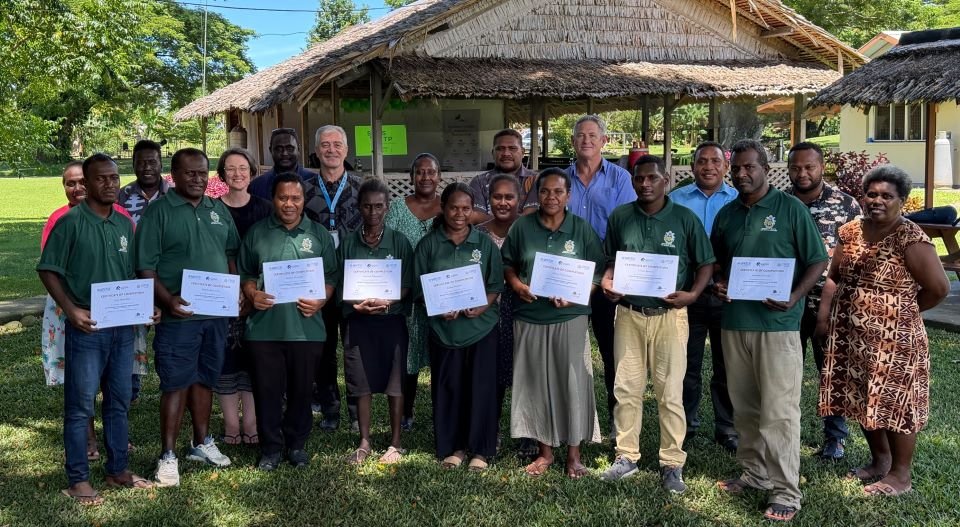
Eight students made up the third group, beginning their studies in April 2025. Their graduation marks an important step in strengthening health security in the country.
Mr Theocharopoulos thanked those who continue to support the program with funding and resources. “I would like to really thank those who are supporting this type of program here in Solomon Islands,” he said. “I am happy because this program operates at a regional level and gives graduates the opportunity to gain more skills in applied epidemiology.”
He also thanked the Minister of Health, fellow health workers, and the graduates themselves. He encouraged them to look at diseases in a broader way. “We should not look at disease only as a single case,” he said. “We must look at it more holistically, as something that affects whole communities.”
He gave special recognition to Newcastle University for helping introduce key concepts and tools used in the training.
Sols FETP, delivered by the Ministry of Health and Medical Services and supported by Australia, builds practical skills in collecting data and using it to make informed decisions amongst frontline health workers. This cohort is predominantly composed of nurses working across the health system, including the National Referral Hospital, Honiara City Council, and Choiseul, Central, and Western Provinces.
Training is delivered in Pijin by local public health experts, including experienced faculty and program graduates, with additional support from the Field Epidemiology in Action Team at the University of Newcastle.