












BY CAMPION OHASIO – DIGITAL CREATOR
Since independence in 1978, Solomon Islands is still waiting for real progress. The country is rich in land, forests, minerals, fish, and people. Yet many provinces still lack good roads, schools, clinics, and jobs. The reason is clear. Almost every resource that could bring development is tied to tribes and customary land. Without the tribes, the land stays locked. Without the land, the resources stay unused.
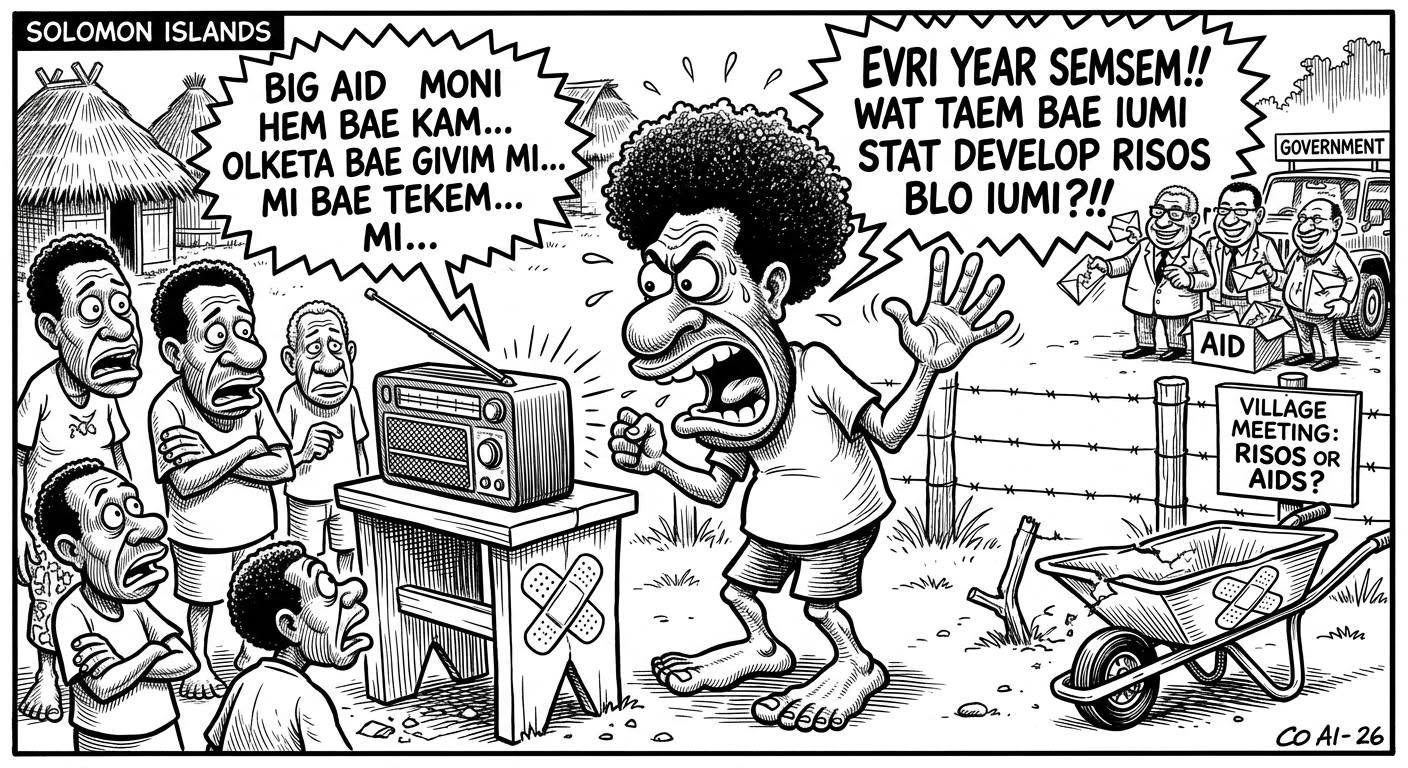
No government since 1978 has made this its main job. Leaders talk about land and tribes in policy papers, but the words stay soft and thin. They appear once or twice and then disappear. No government or leader has sat down for the hard, long work of talking honestly with chiefs and landowners. Instead, every government chooses the easy road. They ask for foreign aid from New York, Beijing, Tokyo, or Canberra. Money arrives. Projects start. Then the money ends and the projects fade. The cycle repeats.
Foreign aid is not evil. It can help in emergencies. But it cannot replace the will of the people who own the land. Aid comes with conditions. It often builds things that local people did not ask for. When the donors leave, the machines stop and the buildings empty. The real owners; the tribes; were never fully part of the plan. So the development never takes root.
Maybe we have been looking in the wrong places for the solution to our development problem. The answer does not live in foreign capitals. It lives in our villages. Tribal chiefs and their people know their land best. They know which hills hold minerals, which forests can be used carefully, and which rivers can support fish farms. They also know the customs that protect the land for the next generation. When government leaders treat chiefs as partners instead of obstacles, trust can grow. With trust, agreements can be made. With agreements, resources can open for fair development that benefits the whole community.
This path is harder than writing another aid request. It means long meetings under the trees. It means listening more than talking. It means writing clear laws that respect custom while allowing investment. It means sharing benefits so that no tribe feels cheated. It means teaching young people both traditional knowledge and modern skills so they can manage their own resources.
Some will say this takes too much time. They prefer the quick money from outside. But forty-eight years of the easy road have shown us the result: slow growth, high debt, and deep frustration. Looking within is not a step backward. It is the only step that can last.
Leaders must stop treating land and tribes as problems to avoid. They must treat them as the foundation of the nation’s wealth. The next government that dares to make real talks with chiefs its top priority will change the story of Solomon Islands. Development will no longer be something that arrives from overseas. It will grow from the soil and the people who have always belonged to it.
The choice is clear. Keep waiting for help from far away, or sit down at home and build together. The chiefs are waiting. The land is ready. The question is whether the leaders finally have the courage to meet them.