
















BY JOY OFASIA
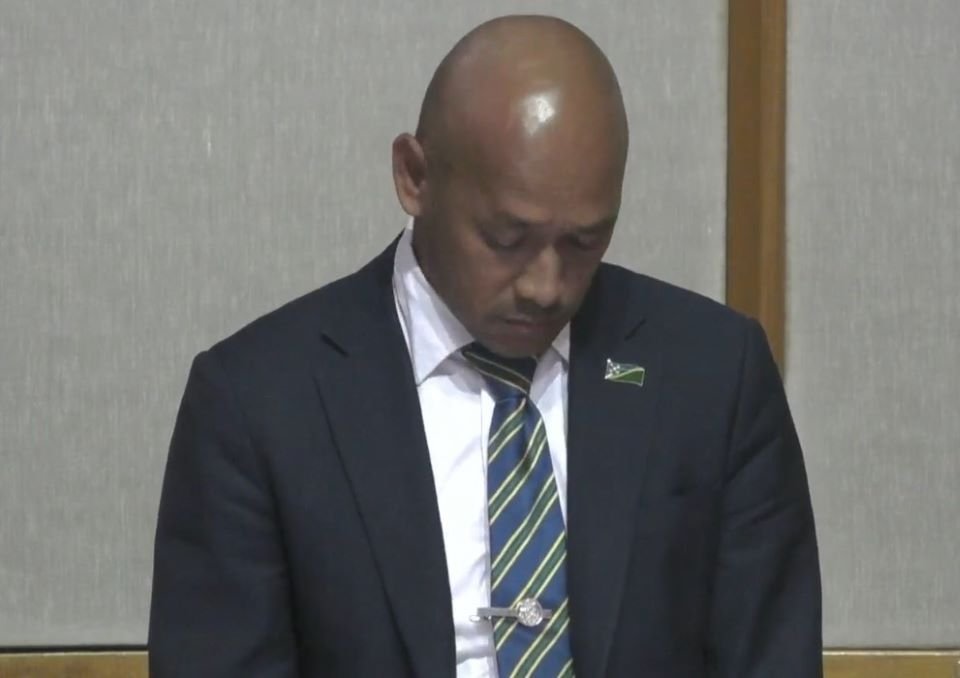
Junior Isikeli Vave, the Solomon Islands Minister for Home Affairs and Member of Parliament for the Shortland Islands Constituency, has voiced strong concerns over the timing of the ongoing motion of no confidence debate in Parliament, warning that political instability could disrupt key national development programs ahead of the next general elections.
Speaking during today’s debate, Minister Vave said the country has only around 16 months remaining before the next national general elections, which he described as too short a period for any incoming administration to effectively establish itself and implement meaningful reforms.
“Mr. Speaker, one of my greatest concerns is timing, we now have approximately only 16 months remaining before the next national general elections. Sixteen months is an extremely short period for an incoming government to establish itself, restructure ministries, appoint leadership arrangements, redirect policies and attempt to deliver meaningful national transformation.”
The Home Affairs Minister said that a new administration formed at this stage would likely spend most of its time reorganizing government systems rather than delivering results for the people.
“The reality is the new administration formed at this stage would spend most of its time reorganizing government machinery instead of delivering real outcomes for our people,” he said. “In my view, this creates unnecessary disruption to the country.”
Vave also emphasized that several major government ministries and national programs are already implementing reforms aligned with the current administration’s policy direction.
“Significant groundwork has already been laid across various sectors of government. Projects are already rolling out. Policies are already being implemented. Development programs are already in motion,” Vave said.
However, he expressed disappointment that some of these initiatives were now being affected by internal coalition disputes and political disagreements within the government.
“But sadly, many of these transformative agendas are now being abandoned or weakened because of coalition disagreements and political diversions within the government camp itself, this is deeply unfortunate,” Vave said.
He further stressed that coalition agreements should serve to strengthen national unity and support development efforts rather than create instability during what he described as a critical implementation phase.
“These coalition agreements should have been used to strengthen national unity and accelerate development delivery, not destabilize government during a critical implementation phase,” he added.