


BY JOY OFASIA
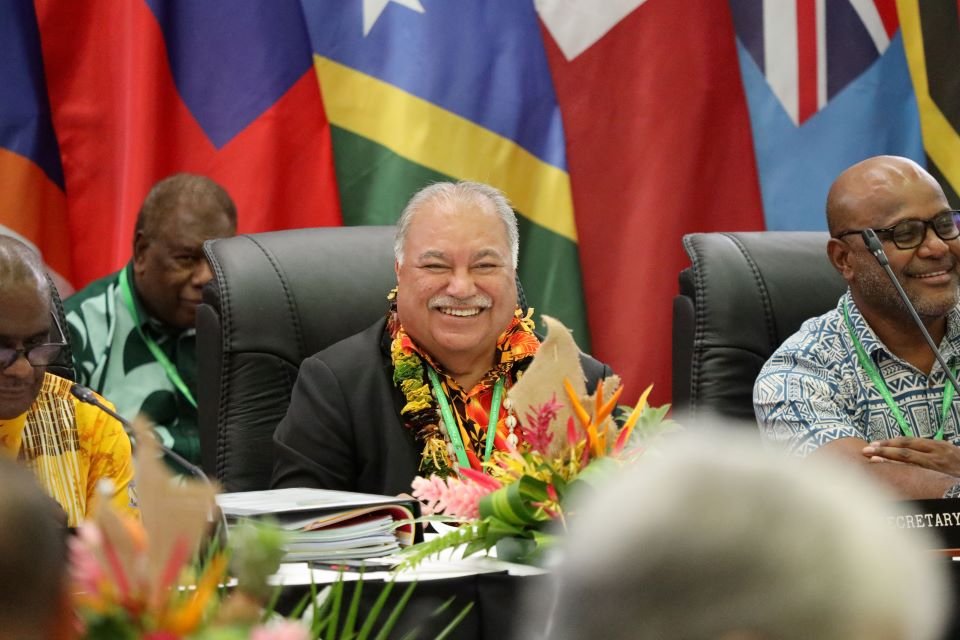
Pacific Islands Forum Secretary General Baron Divavesi Waqa urged regional leaders at the Pacific ACP Leaders Meeting to maintain unity, enhance diplomatic efforts, and advocate for more equitable development financing in the face of increasing global instability and climate change challenges.
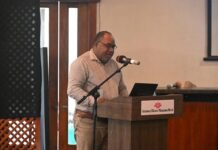
“We meet at a moment of profound global change,” Waqa said, opening the high-level meeting at the Forum Fisheries Agency conference room in Honiara. “The urgency could not be any clearer.”
Citing alarming global economic forecasts, Waqa noted that more than 60 developing countries — many of them small island states — are already facing or approaching debt distress, while the Pacific continues to suffer disproportionate economic losses from climate-related disasters.
“Climate disasters already cost our economies between six and nine percent of GDP each year,” he told leaders. “This is not just a number — it represents homes and livelihoods destroyed, schools closed, damaged infrastructures, and futures disrupted.”
The Secretary General stressed that climate change remains the single greatest threat to the region and stressed the need for continued advocacy, including through the International Court of Justice’s Advisory Opinion and the ongoing Political Climate Champions initiative ahead of COP30.
“Our Leaders have remained unwavering in their efforts,” he said. “Let us carry forward our call for climate justice.”
Waqa also pointed to the Samoa Agreement, signed in 2023, as a new opportunity to embed Pacific priorities within the EU-OACPS partnership — but warned that vision must be backed by concrete actions.
“Without clear institutional arrangements, a costed plan of implementation, and adequate resources, the Samoa Agreement risks becoming a framework of words rather than a driver of change,” he cautioned.
He called for united support behind the upcoming appointment of a Pacific Assistant Secretary-General at the OACPS Secretariat, a position he described as “not just symbolic — it is strategic.”
On development aid, Waqa was blunt. While acknowledging existing EU support, including €10 million for the Pacific Trade and Sustainable Development programme and €20 million for PEUMP’s second phase, he argued it falls far short.
“The EU’s global development envelope is €79.5 billion. The Pacific’s share is less than €200 million,” Waqa noted. “Let us be frank: this is not proportionate to the scale of our challenges or commitments made.”
He urged for a review and expansion of the Pacific’s allocation under the EU’s NDICI Global Europe funding mechanism, stating that obligations from trade and environmental partnerships are growing heavier for member countries.
As the meeting moved to endorse its official outcomes, Waqa left leaders with a rallying message.
“Our institutions must be made fit-for-purpose. Our advocacy must remain sharp. Our partnerships must deliver real impact. And our unity must remain unshakable,” he said. “If we succeed, we will reaffirm the Pacific not as a bystander to global change, but as a confident, resilient, and future-ready force shaping the world around us.”