














BY LIONEL TAORAO – ISLES FREELANCER
For years, Aroaha Primary School in Ulawa Island, Makira/Ulawa province stood as a symbol of community determination — its classrooms and staff houses built from the sago palms and bush materials that surrounded the village.
Every rainy season, parents and guardians would rally together to patch leaking roofs or replace rotting posts, determined to keep the school standing for their children’s education.
But over time, their resources began to run dry. The same local materials used for the school were also needed to build and maintain homes, garden huts, kitchens, and copra dryers. As Ulawa’s population grew, so did the strain on the island’s natural resources. What was once readily available in the bush became harder to find.

All these worries eased when residents of Aroaha Primary School were informed that the North Ulawa Ward Development Committee (WDC) would fund a new permanent staff house using the Ward Development Grants received from the Makira Ulawa Provincial Government. It was welcome news for a community that had long depended on temporary bush-material buildings.
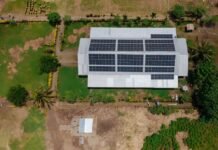
Today, two new two-bedroom houses mark a long-awaited improvement for teachers’ accommodation at the school. One of the houses was fully funded by the North Ulawa WDC, while the second was co-funded through a partnership between the WDC and the Aroaha School Administration.
Speaking during the project’s completion, School Chairperson Mr. Dennis Wa’apu said the school committee and community are very grateful for the WDC’s ongoing support. He expressed satisfaction with how the Ward Development Grants have been used to meet real community needs.
“This is the first time our community has seen real development from ward grants. The new staff houses are a great improvement for our school and a sign of good partnership between the WDC and the people,” Mr. Wa’apu said.
He added that his community is overjoyed now that their school has two new permanent staff houses.
“This will definitely put a rest to the yearly repairs and maintenance to staff houses. We can now only concentrate on the three sago palm thatched roof classrooms,” he said.
Community elder Mr. John Lada also shared his gratitude, reflecting on how long the people of Ulawa have waited for such attention.
“From history, it is evident that on Ulawa Island, when it comes to the distribution of development, we were always regarded last — we were the last to receive,” Mr. Lada said. “But today, in North Ulawa Ward, we were prioritized out of the three schools in this ward, and I am very thankful for prioritizing and considering our school to have our long-standing issue addressed.”
Meanwhile, North Ulawa WDC Chairman Mr. Hillary Poe said the successful completion of the project demonstrates the committee’s strong commitment to improving education in the ward.
“This project shows how important education is to the North Ulawa WDC,” Mr. Poe said. “We are committed to ensuring that we make good use of the ward grants to develop North Ulawa Ward, even though the grants received are not that big.”
The completion of the staff houses represents not just new buildings, but a new chapter for Aroaha Primary School — a story of partnership, persistence, and how grassroots development can transform lives when ward grants are managed effectively.