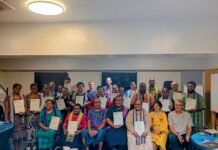
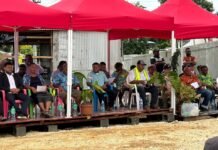
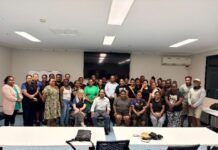
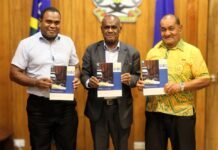

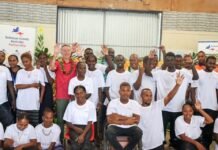
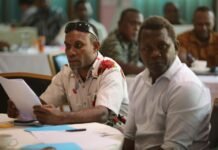
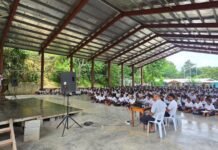
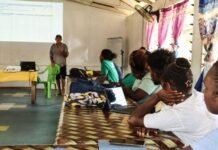
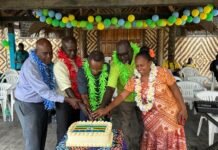
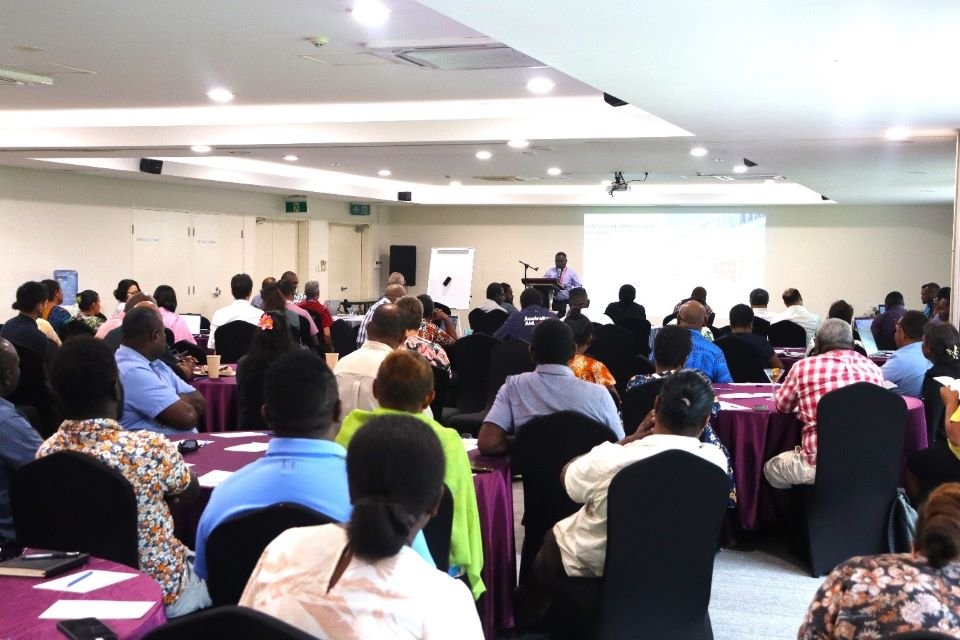
The Ministry of Health and Medical Services (MHMS) commenced its National Annual Operation Plan and Budget (AOP&B) 2026 workshop in Honiara, bringing more than 120 participants, consisting of the Senior Management Executive, Heads of Corporate Services, Heads of Public Health, Heads of NRH departments, Donor and Development Partners, Provincial Health Directors, Provincial Nursing Directors and Provincial Accountants.
The four-day (26th to 29th August) workshop aims to develop a strategic objective necessary to achieve the indicators outlined in the MHMS National Health Strategic Plan 2022-2031, with the theme ‘Evidence-Based and Integrated Health Planning and Budgeting for Better Health Outcomes’.
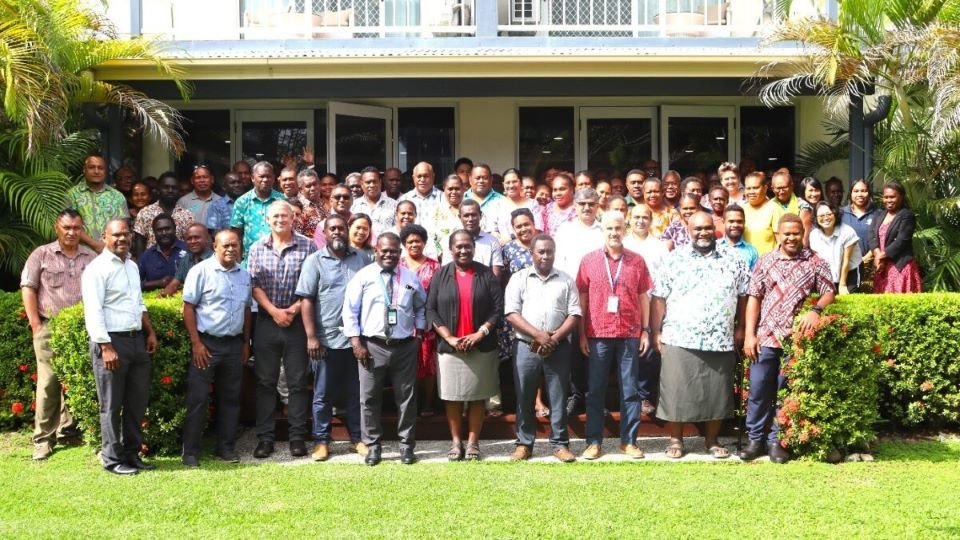
Attending the official opening of the AOP & B were the Ministry of Finance and Treasury Permanent Secretary, the Ministry of Health and Medical Services Permanent Secretary, Health Deputy Secretaries, Heads of Departments, Provincial Representatives, and Health Development Partners.
Mrs. Pauline McNeil, Health Permanent Secretary, at the official opening, welcomed all the participants and said the AOP&B is very important as it gives an opportunity to pause, reflect, and evaluate our journey in health service delivery, while also planning and prioritising the work that lies ahead. “Over the next four days, we will engage in discussions that are not only about numbers, budgets, and targets, but about the lives of Solomon Islanders – the mothers and children, the youth, the elderly, and the most vulnerable in our communities”.
PS McNeil said this year’s workshop is guided by the theme is timely and relevant, reminding us that the work is not just about producing plans and budgets, but about ensuring that they are based on reliable evidence, integrated across programs and sectors, and focused on tangible improvements in the health and wellbeing of our people.
Mr. McKinnie Dentana, Finance and Treasury Permanent Secretary was the Guest of Honour and in his keynote address, said the workshop is timely and critical. It is not only about discussing technical matters and planning and budgeting, but also shaping how the Government delivers services, manages scarce resources to improve the lives of Solomon Islanders.
He said this AOP meeting held after the launch of the 2026 National Budget strategy on 22 August; makes this a valuable opportunity for all to ensure planning discussions are well aligned with the Government’s fiscal priorities and policy commitments.
Therefore, he outlined some of the key priorities and strategies that guide and strengthen the health sector to ensuring better outcomes for all Solomon Islanders.
He outlined, the Government’s 2026 Budget strategy is prepared within a projected deficit of 5.1 percent of GDP, down from the 2025 Budget deficit of 7.5 percent of GDP. With this, the Government is aiming to manage its finances more carefully and limit overspending compared to its income as in the previous years. To address the deficit shortfall, the Government will seek external support from various sources, including additional funding from new revenue streams and credit financing from financial institutions.
“Importantly, the Government is committed to ensuring that all mandatory costs, ongoing contracts, and obligations are fully funded in the 2026 Budget, while simultaneously improving the delivery of essential services. Furthermore, development funding will be directed toward advancing key infrastructure projects to build productive capacity within the economy and promote sustainable growth and development.
“As we all know, planning and budgeting are at the very heart of governance, determining how national priorities are translated into action and how progress as a country is measured. The Ministry of Finance and Treasury is committed to ensuring that this process is inclusive, transparent, and firmly aligned with the long-term vision of our government. The Ministry of Health is the second largest ministry in the country, and that is also reflected in its total health budget over the last 3 to 5 years. This means that the total health is the second health budget of between 10% to 13% of the total Government budget over the last 3 to 5 years. This means that the total health expenditure per/capita is around SBD700 to 800+ Million per annum”, said PS Dentana.
He further outlined, the Ministry of Health’s 2026 AOP theme, “Evidence-Based and Integrated Health Planning and Budgeting for Better Health Outcomes,” is timely and significant as it emphasizes the importance of using credible data, research, and performance evidence to guide health planning and resource allocation.
“By promoting an integrated approach within ministry and across ministries, partners, and communities. It ensures that limited resources are aligned with priority health needs to deliver the greatest impact. The focus is on strengthening accountability, efficiency, and equity in the health system, while fostering collaboration between government, development partners, and service providers.
“Aligned to the 2026 Strategic Policy Directions, this theme reflects the Government’s commitment to good governance, prudent financial management, and inclusive development. A core principle of Budget 2026 is “Improve Service Delivery through Quality Spending”—ensuring public funds are efficient, well-targeted, and results-oriented. This is vital for the health sector, where major challenges persist: non-communicable diseases cause seven out of ten deaths annually, childhood stunting affects 33 percent of children (compared to 29 percent in Vanuatu and 8 percent in Fiji), and 33 percent of the population still lacks access to safe drinking water—placing Solomon Islands among the world’s lowest in rural water access. In response, the Government’s health investment will prioritize universal health coverage, stronger action against communicable and non-communicable diseases, and the use of digital health to improve service delivery. This includes rehabilitating health facilities in Honiara and the provinces, training health workers, strengthening external partnerships, and focusing on reducing NCD-related deaths while addressing the resurgence of malaria and other diseases”, said PS Dentana.
He further stated, the Government for National Unity and Transformation has set a clear and ambitious policy direction. By 2026, we highlight that our collective aim is to consolidate economic stability, strengthen our institutions, and build resilience across all sectors of our economy and society.
“Central to this vision is the commitment to fiscal discipline, inclusive development, and accountability in how we manage public resources. This means that every ministry, every agency, and every official has a role to play in ensuring that budgets are not merely financial figures, but instruments of real transformation.
“Planning and budgeting must be results-oriented. They must be linked to the outcomes we want to achieve for our people—whether it is better health services, stronger education systems, resilient infrastructure, or more opportunities for our young people”, said PS Dentana.
To conclude, he encouraged everyone that transparency and accountability must remain the foundation of our financial management system. We must ensure that every dollar we allocate and spend translates into tangible improvements in the lives of Solomon Islanders.
“Colleagues, the path towards 2026 is both challenging and promising. The GNUT government has laid out a vision for transformation. It is now our responsibility to ensure that our planning and budgeting processes become powerful tools to realize that vision.
“I encourage each of you to actively participate in this workshop, to share openly, and to work together in building a system that is disciplined, innovative, and people-centered.
“On behalf of the Ministry of Finance and Treasury, I reaffirm our commitment to supporting this process and to working with all stakeholders to achieve the results our country aspires to.
“Let us move forward with confidence that through discipline, accountability, and collaboration, we will build a stronger and more resilient Health system and achieve a healthy future for all Solomon Islanders”, said PS Dentana.
Source: Ministry of Health and Medical Services