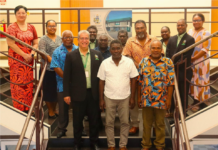



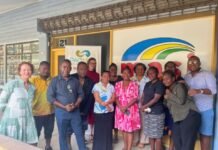
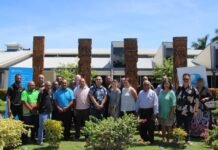
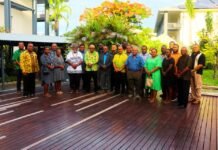


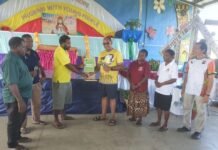


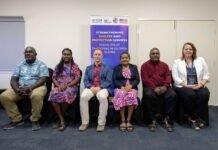
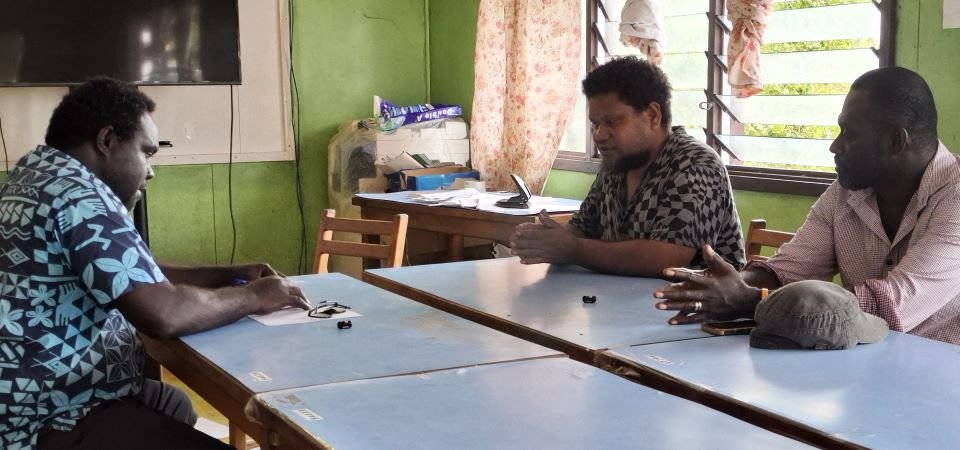
The Ministry of Agriculture and Livestock Development (MALD), in partnership with the Agriculture Investment for Markets and Nutrition (AIM-N) Project, on Tuesday has successfully conducted a courtesy visit to the Choiseul Province Education Authority, marking an important step toward improving nutrition in boarding schools across the province.
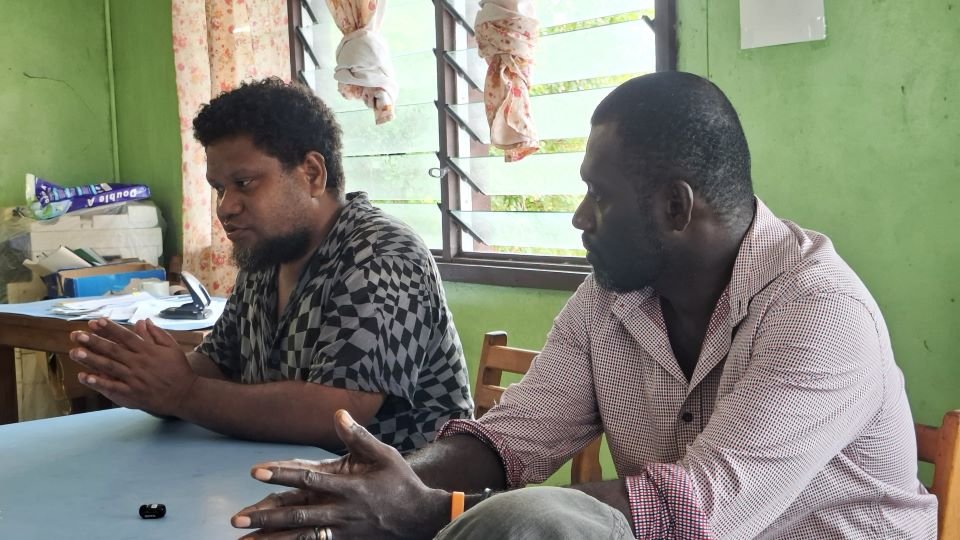
The visit included a meeting with the Choiseul Province Chief Education Officer, Mr. Henry Deva, during which both parties discussed collaboration on the implementation of nutrition-focused school initiatives under the AIM-N Project.
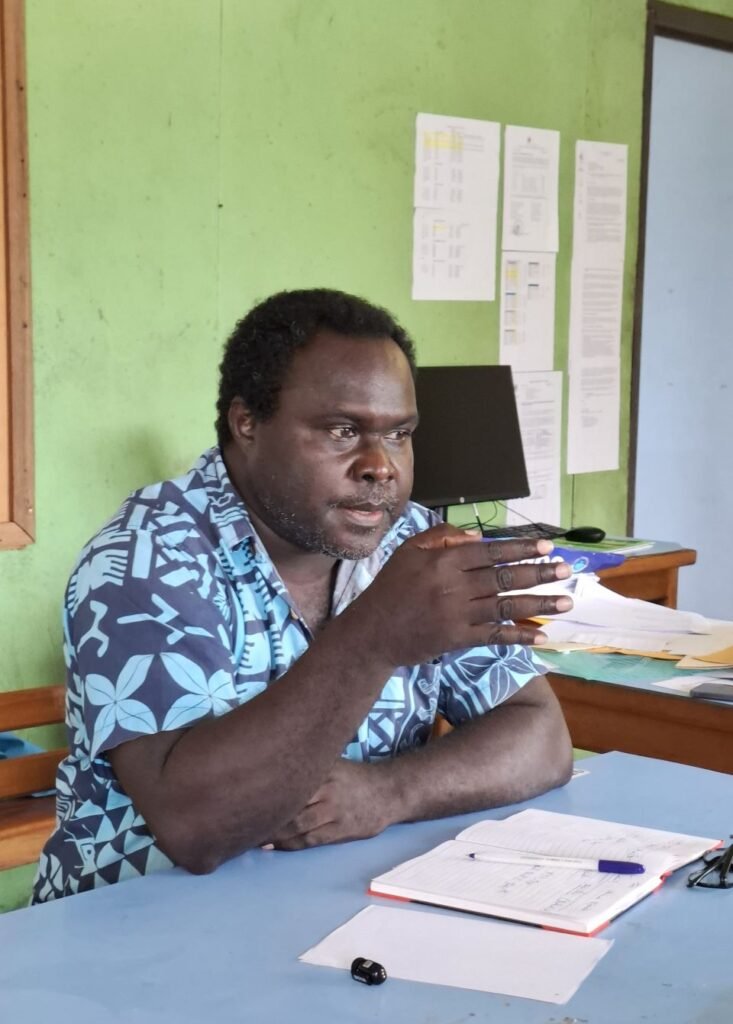
Mr. Deva welcomed the visit and emphasized the importance of nutrition in supporting students’ learning and overall wellbeing.
“Good nutrition is critical to student learning, when students do not eat well, it affects their performance in school. We therefore welcome this project and will work closely with health authorities and the Ministry of Agriculture to ensure successful implementation in schools,” Mr. Deva said.
He highlighted that school nutrition and meal quality have been longstanding concerns within the education sector, often raised during teachers’ conferences, and noted the significance of donor partners now prioritizing this area of support.
The Choiseul Education Authority expressed strong interest in the project’s farming and training components, which aim to enable schools to sustain food production systems beyond the project’s lifespan.
Mr. Deva also stressed the importance of involving teachers closely linked to nutrition-related subjects, including agriculture, health, science, and home economics, to strengthen the effectiveness of the initiative.
AIM-N Monitoring and Evaluation Manager, Mr. Edward Suinao, outlined the project’s school feeding initiative, explaining that the project will target up to two boarding schools in Choiseul, Isabel and Western Provinces, starting with one school in each province, subject to consultations with the Ministry of Education and provincial authorities.
“The school feeding initiative is linked to the nutrition objectives of the AIM-N Project. The project will be commencing the activities implementation phase during the second half of this year,” Mr. Suinao said.
He explained that several approaches are being considered, including sourcing food locally from surrounding communities to support household food security, as well as establishing or strengthening school farms to supply fresh and nutritious food for students. The project also plans to support school kitchens through improved facilities and provision of essential equipment.
These interventions fall under Component 1: Action for Nutrition of the AIM-N Project, which links nutrition education with diversified, nutrition-sensitive agricultural production at the community level and improved nutrition in boarding schools. The component focuses on social and behaviour change, women-led food production, and improved food preparation and nutrition education, in partnership with health and education authorities.
The AIM-N Project is a six-year initiative comprising four interrelated components aimed at improving nutrition, strengthening inclusive market access, and building resilient agri-food systems. The project will focus on foundational activities in its first year, followed by five years of full implementation.
The successful visit reflects MALD and AIM-N’s commitment to strengthening partnerships with provincial education authorities to improve student nutrition, learning outcomes, and community livelihoods.