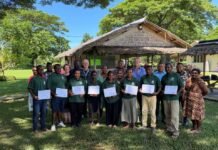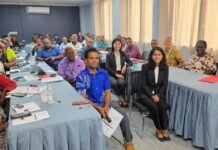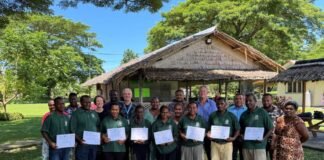





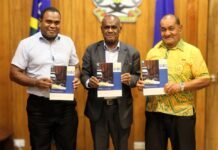














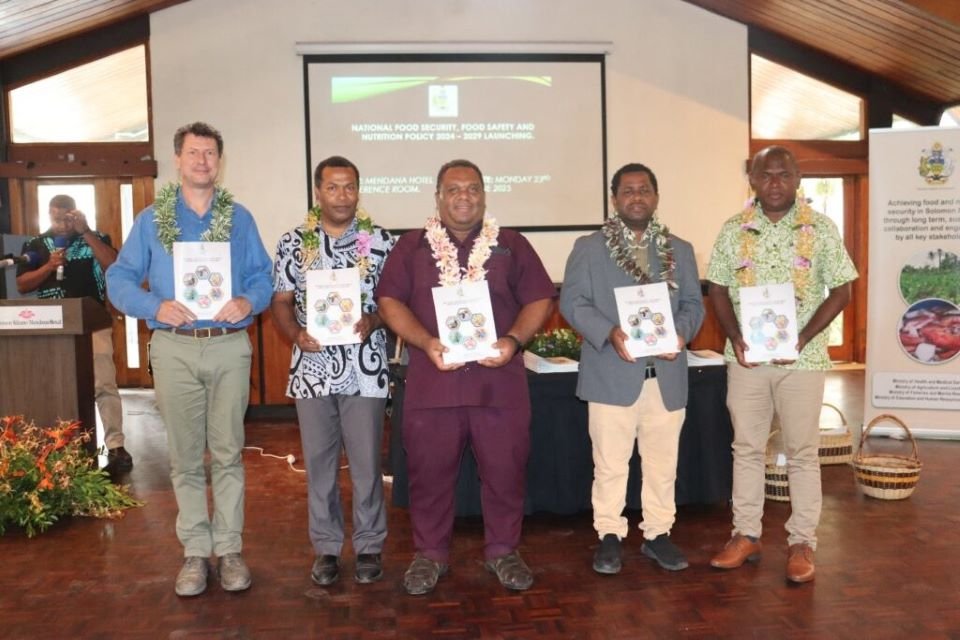
The Ministry of Health and Medical Services (MHMS) together with other three aligning-ministries; Ministry of Agriculture and Livestock, Ministry of Education and Human Resources Development and the Ministry of Fisheries and Marine Resources and Stakeholders yesterday launces the “National Food Security, Food Safety and Nutrition Policy 2024-2029 (NFSFSNP2024-2029).
The “National Food Security, Food Safety and Nutrition Policy 2024-2029 – Vision is “achieving food and nutrition security in Solomon Islands, through long term, sustainable collaboration and engagement by all key stakeholders”. Its goal is “to ensure sufficient, safe, nutritious foods are readily available, accessible, affordable, and acceptable to all Solomon Islanders at all times”.
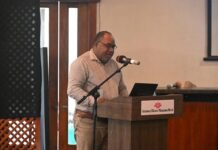
The Health Minister Honourable Dr. Paul Popora Bosawai during his keynote address described the launching as crucial national commitment – our National Food Security, Food Safety and Nutrition Policy 2024-2029. “Food insecurity, unsafe food and poor nutrition is a matter that affects every soul in our beloved Solomon Islands. We gather here to address the critical issue of National Food Security, Food Safety, and Nutrition Policy, a policy that is not just a document but a commitment to the health and well-being of our people.
He highlighted the challenges we face through our current food, nutrition, and health situation demands our immediate attention. To set the scene and name a few, data indicates:
- Alarming nutrition indicators, one in three of our children under five are stunted, with a significant portion of our population facing malnutrition in its various forms.
- Anaemia affects nearly 40% of our children and more than half of our pregnant women.
- The burden of non-communicable diseases, often linked to poor nutrition and unsafe food practices, continues to rise at an unprecedented rate now account for the majority of adult deaths that is 70% of adult deaths in Solomon Islands attributed to NCD.
- Our food safety situation remains a concern, with many citizens uncertain about the quality and safety of what they consume daily due to rising dependence on imported, ultra-pro cessed foods that is displacing our traditional diets and values.
“These statistics are not mere figures on a page; they represent our families, our friends, our children, and our future”.

He said the policy responds to these issues with bold, strategic action. It is a multisectoral policy grounded in the principles that every Solomon Islander has the right to safe, affordable, and nutritious food at all times.
The health issues this policy aims to address are dire and multifaceted. It outlines clear objectives to:
To tackle the rising rates of diet related NCDs such as obesity, diabetes, and heart disease, which disproportionately affect our communities.
To combat malnutrition by reducing stunting and anaemia, and ensure that our children have the proper nutrition necessary for their growth and development through promoting breastfeeding and healthy child feeding practices. Work to ensure food safety standards are upheld, so our people can trust the food they eat and the water they drink through strengthen food safety standards and monitoring.
- Improve school and community nutrition education.
- And ensure our food systems are gender- and disability inclusive.
He said the Ministry’s commitment is to reaffirm its leadership role and commitment in implementing this policy for our nation’s future. Moreover, it reinforces our commitment to the Sustainable Development Goals, specifically the target of zero hunger and ensuring healthy lives and promoting well-being for all at all ages.
“First we will focus on in improving nutrition and health indicators by scaling programs that promote healthy eating habits and educate our communities about the importance of nutrition through expanding our public health messaging on healthy diets and NDC prevention. We will work together to ensure that our health systems are equipped to address these issues and provide the necessary care for those in need.
“Second, regulations to ensure food quality and safety. Food producers, distributors, importers and exporters will receive the training and resources they need to meet safety standards, ensuring that our food supply is safe for consumption. We will establish robust monitoring systems to detect and address potential food safety issues before they become a threat to public health etc. Lastly, prioritize maternal child nutrition, recognizing that the health of future generations begins with the well-being of mothers and their children. Such as, train our health workers on the high-impact nutrition interventions that will support programs that provide essential nutrients to pregnant and lactating women and ensure that children receive the proper nutrition during their eating habits and educate our communities about the importance of nutrition through expanding our public health messaging on healthy diets and NCD prevention etc.
He further said the National Food Security, Food Safety, and Nutrition Policy is not just a policy but a vision for a healthier, more prosperous Solomon Islands.
“Let today be more than a launch – let it be a call to action. It is a commitment to breaking the cycle of malnutrition and poor health, ensuring that every individual has the opportunity to thrive. I urge each of you present here today to embrace this vision and work collaboratively towards its realization and turn this policy into results. Let us join hands across ministries, organizations, civil society, private sector and communities to create a future where every Solomon Islander can access safe and nutritious food, live a healthy life, and contribute to the growth and development of our nation.
To conclude he highlighted, this policy is the result of collaboration, consultation, and shared vision.
He acknowledged the technical and financial support of FAO, and sincerely thank UNICEF/WHO for their partnership and dedication in the review and development of this important document.
He further extends his sincerest gratitude to all the stakeholders and all key officials of the line partner Ministries (Health, Agriculture, Fisheries and Education) who provided the context in shaping up this policy document.
Meanwhile, the Minister for Ministry of Agriculture and Livestock Hon. Franklyn Wasi and Supervising Permanent Secretary for the Ministry of Fisheries and Marine Resources Mr. Patteson Lusi both highlighted their ministries through commitment to innovation and cross-sector collaboration to support and drive the implementation of this policy.