














BY JOY OFASIA
The special audit into spending and procurement for the 2023 Pacific Games has found serious weaknesses in the way public money was planned, spent and managed.
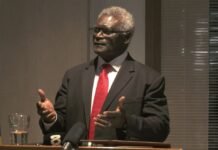
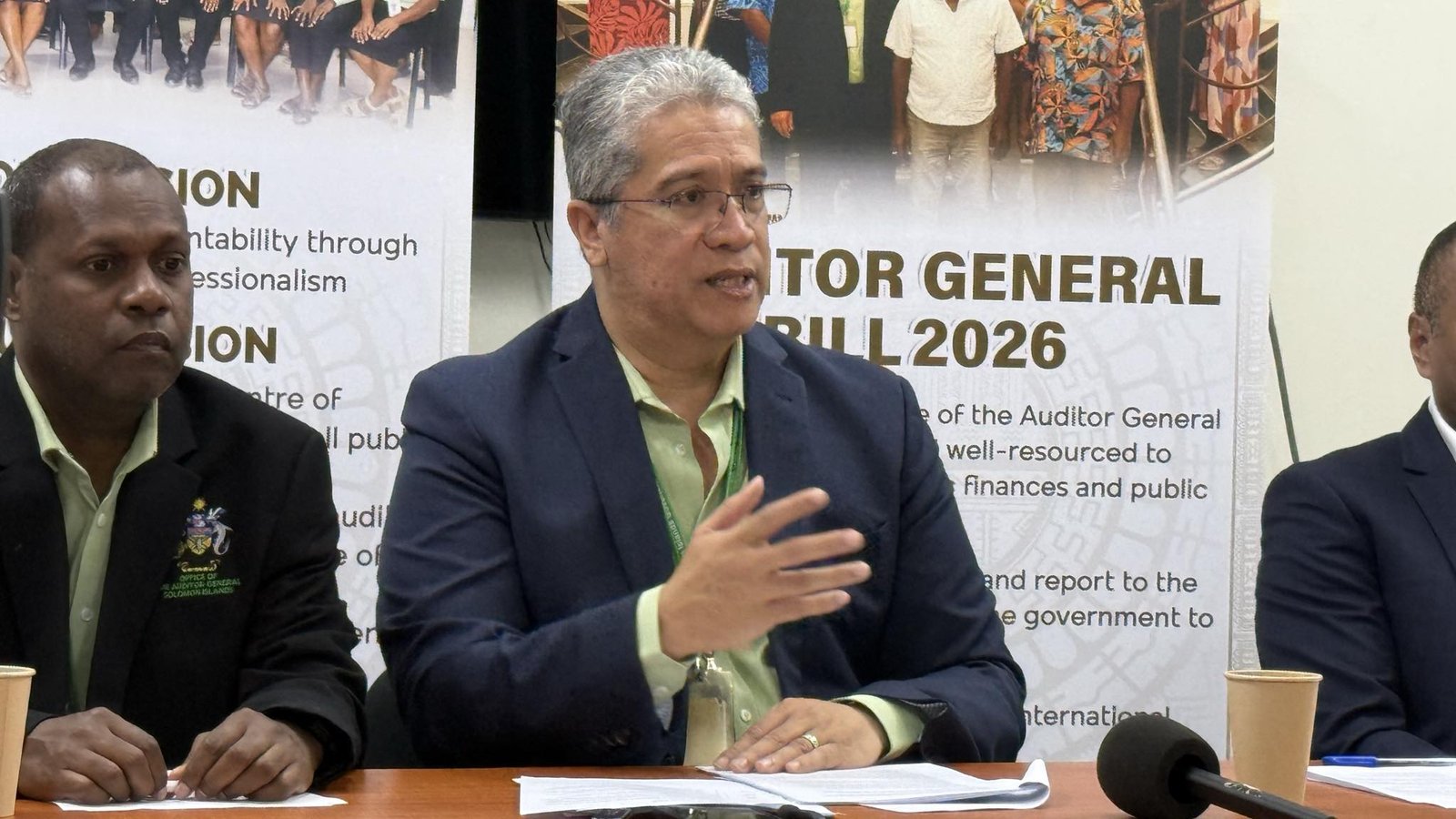
Outgoing Auditor General David Teika Dennis said the findings showed repeated failures by the National Hosting Authority (NHA) to properly plan spending, follow approved budgets, apply procurement rules and keep clear records.
“My findings in this audit are serious,” Mr Dennis said.
He said the audit found failures to “plan properly, keep to approved budgets, follow the stated evaluation method, apply competition fairly, document decisions, carry out due diligence, manage conflicts of interest, and justify awards” to suppliers.
Mr Dennis said the problems were made worse by missing records, errors and weak practices.
He said these issues sometimes overlapped, making it difficult for auditors to fully trace how some procurement decisions were made.
“Appendix three details of exceptions, and referrals will be made where there are concerns about fraud or wrongdoing,” he said.
One of the major concerns was poor budget control.
The audit examined 16 procurement samples worth a total of $222.40 million. Approved budgets were not provided for five of those samples, worth $127.96 million.
This represented 57.5 percent of the total value examined.
The five cases included the design and construction of the SIFF Football Academy, valued at $84.29 million, and the purchase of property for the Sports Legacy Haus, valued at $34 million.
Mr Dennis said that where budgets were available, some were too weak to properly control costs.
One example involved the supply and delivery of toilet paper.
An initial contract amount of $6.18 million was linked to an overall budget of only $300,000. The contract was later reduced to $1.89 million, but this was still above the original budget.
“Without approved budgets and clear cost estimates, the Authority could not show that spending was planned, affordable, justified or value for money,” Mr Dennis said.
He warned that weak budget controls could allow inflated prices, unnecessary spending, excessive contract variations or preferential treatment to go unnoticed.
He said these matters would be referred for further investigation.
The audit also found that competition was bypassed in several procurement processes without enough justification.
Bid waivers were issued for five procurements worth a combined $29.61 million.
These included catering services at SINU Panatina and Kukum worth $12.3 million, septic waste removal and servicing worth $8.5 million, catering services at St Joseph Tenaru worth $4.6 million, U-Drainage improvement worth $2.3 million and toilet paper supplies worth $1.89 million.
“I was not satisfied that the conditions for waivers were properly met in all cases,” Mr Dennis said.
He said examples included a drainage project and branded toilet paper, where the reasons for avoiding normal competition did not clearly fit the limited circumstances allowed under the procurement manual.
Mr Dennis described bid waivers as high-risk because they reduce competition.
“If they are not tightly justified and independently reviewed, contracts may be steered to preferred suppliers, prices may not be tested, and decisions may appear biased,” he said.
He added that even when fraud or corruption was not proven, poor use of waivers created a serious risk to public confidence.
The Auditor General also referred to a court ruling which indicated that blanket bid waiver approvals by the NHA were unlawful.
Another major concern was the way tenders were evaluated and contracts awarded.
The audit found several cases where the successful supplier was not the lowest bidder or did not appear to have the strongest technical credentials.
For the SIFF Football Academy project, the successful supplier received a contract worth $84.3 million, including variations.
However, another supplier received higher technical scores and submitted a lower price.
The successful contractor’s price was $9.66 million higher than the lowest conforming tender.
The audit also raised concerns about the $47.4 million catering contract for the Games.
According to the audit, there was no evidence that the successful supplier had previously delivered catering services on such a large scale. An experienced international bidder received a higher technical score.
Concerns were also raised over branding and signage.
The successful supplier was awarded the contract even though its price was $2.045 million higher than a competitor with stronger relevant experience.
The supply and delivery of medals also raised questions.
The successful supplier’s price was $284,000 higher than its competitor. The supplier also appeared to operate outside its main business area and had previously been deregistered for failing to file annual reports.
Mr Dennis said procurement agencies must follow the rules and evaluation methods stated in tender documents.
“A basic procurement rule is that the entity must do what the tender documents say it will do,” he said.
He said bidders should be assessed against the criteria they were told would be used.
The audit found that in some cases the NHA used a Lowest Cost Evaluation approach, where the cheapest compliant bid would normally be selected, but then awarded contracts to higher-priced bidders without clear reasons.
Mr Dennis said quality, capability and local benefits could be considered, but these factors had to be included in the evaluation method from the beginning.
“They cannot be added or weighted differently after bids have been received,” he said.
He warned that changing the process after bids were submitted could lead to accusations of unfairness and bias.
The audit also questioned the role of the Games Tender Board.
The board had an oversight responsibility before contracts were awarded. However, the audit found that it did not always correct incorrect assumptions, require the stated Lowest Cost Evaluation method to be followed or stop procurement processes that needed a proper quality-and-cost assessment.
Mr Dennis said some decisions by the board may have made the non-compliance worse because they relied on reasons that were not part of the original evaluation method.
The audit also examined claims that supporting local businesses was a reason for some procurement decisions.
Mr Dennis said supporting local businesses could be a legitimate government objective, but it must be clearly stated in the tender criteria and fairly assessed.
“It should not be used after the event to justify awarding to a higher-priced or less experienced supplier,” he said.
He also questioned whether some local capacity-building benefits were actually achieved where local suppliers depended heavily on offshore companies or where much of the contract value went overseas.
Due diligence checks on suppliers were another major concern.
The audit found that the successful contractor for the SIFF Football Academy, whose revised contract value reached $84.3 million, was deregistered before and during the contract period.
Another successful contractor for sports equipment was registered only six days before the tender closed.
Despite limited evidence of its experience and credentials, the company was awarded a contract.
The successful Games catering supplier also progressed through the procurement process despite missing important documents referred to in its request for proposal.
Mr Dennis said most contractors did not provide enough financial information to properly assess their financial capacity.
Some contracts also allowed suppliers to receive between 30 and 50 percent of the contract value when the contract was signed, before goods, services or construction work had been delivered.
He said such arrangements increased the risk of financial losses, failed projects, regulatory breaches and abuse of public funds.
They also weakened safeguards designed to prevent shell companies, related parties, inexperienced businesses or unsuitable suppliers from receiving government contracts.
The audit further raised concerns about conflicts of interest.
Mr Dennis said the NHA had a conflict-of-interest process, but the evidence suggested it was not always applied carefully enough.
He said this was particularly important because senior officials, tender committee members and board members were involved in high-value procurement decisions.
“Weak controls increase the risk of undisclosed relationships, preferential treatment, collusion, personal benefit and unfair advantage,” he said.
He stressed that even where an actual conflict was not proven, weak controls could damage public trust.
“I will be referring these matters for further investigation,” Mr Dennis said.
The special audit therefore paints a serious picture of procurement management during preparations for the 2023 Pacific Games.
While the findings do not automatically prove that corruption occurred in every case, the Auditor General said the repeated weaknesses created opportunities for fraud, favouritism, waste and misuse of public money.
The findings also raise questions about whether Solomon Islands received proper value for the millions of dollars spent preparing for and hosting the Games.
Mr Dennis said the detailed cases were documented in the audit report and its appendices, with matters involving possible fraud or wrongdoing to be referred for further investigation.
The report places a strong focus on the need for government agencies to improve financial controls, procurement planning, competition, supplier checks, conflict-of-interest management and record keeping.
For taxpayers, the central concern is simple: public money must be spent openly, fairly and according to the law.
The Auditor General’s findings show that when those safeguards are weak, it becomes much harder to prove that public funds have been protected and that contracts have been awarded in the best interests of Solomon Islands.