






BY JOY OFASIA
The special audit into the use of public money for the 2023 Pacific Games has found serious failures in financial management, procurement and accountability at the National Hosting Authority (NHA).
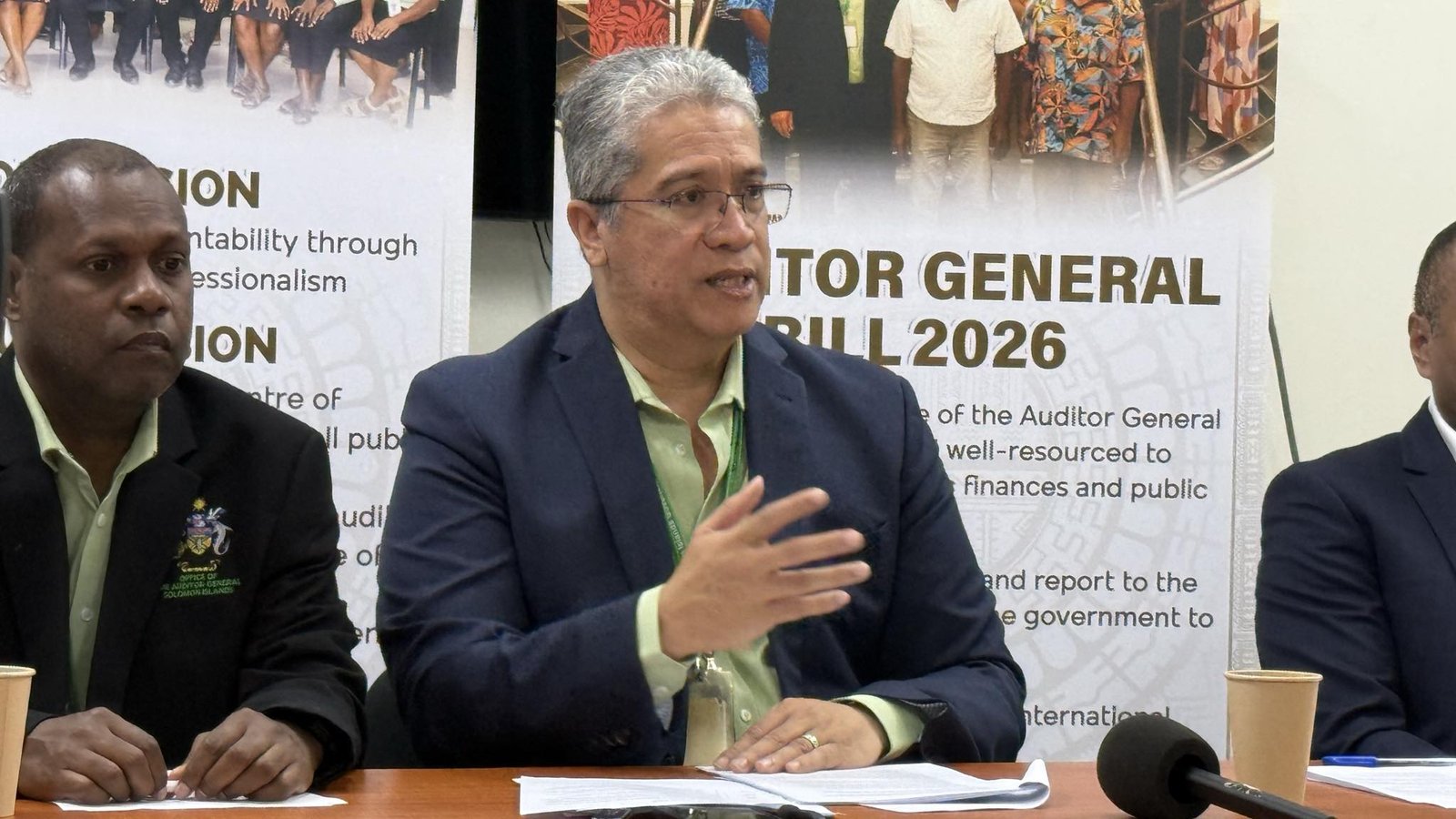
Outgoing Auditor General David Teika Dennis said the audit found that the Authority did not follow important requirements of the Public Financial Management Act 2013 (PFMA 20213) when managing the Sports Solomon Fund, which was established to finance the Games and maintain sports facilities after the event.
“My overall conclusion is serious,” Mr Dennis said.
“The Authority did not comply with key requirements of the Public Financial Management Act when establishing the budget for the Special Fund.”
He said this meant the Authority did not have the legal authority needed to spend money from the fund.
Mr Dennis also said the NHA used procurement practices that were contrary to the law.
“These weaknesses exposed public money to poor value for money, irregular expenditure, fraud and corruption risks, and the perception that decisions may not have been fair or impartial,” he said.
The audit was carried out by contract auditors KPMG Fiji and examined how public money was used to deliver the Pacific Games.
Mr Dennis said his office had undertaken two related audits.
One was a financial statements audit of the Sports Solomon Fund, which was still nearing completion.
The second was a special audit of procurement practices, which has now been completed.
The Government signed the 2023 Pacific Games Host Agreement in 2016.
Under the agreement, Solomon Islands committed to providing the facilities, venues and infrastructure needed to host the Games.
Parliament later established the Sports Solomon Fund through the Pacific Games 2023 Act 2017.
The fund was intended to hold money for hosting the Games and for managing and maintaining sports facilities after the event.
The NHA was responsible for overseeing the Government’s obligations, managing the Special Fund and planning and budgeting for the Games.
It was also responsible for maintaining bank accounts and overseeing the Games Organising and Facilities Committees.
The Authority’s Secretariat provided finance, procurement, audit, legal, information technology and general administrative support.
Mr Dennis said these responsibilities carried a high duty to ensure public money was spent lawfully and fairly.
The special audit examined 16 procurement samples worth a total of SBD$222.40 million.
At the time the audit began, the NHA had processed purchase orders worth SBD$502.16 million.
Among the largest contracts examined was the design and construction of the SIFF Football Academy, valued at SBD$84.29 million.
The supply and delivery of catering services for the Games was valued at SBD$47.43 million.
The purchase of property for the Sports Legacy Haus was worth SBD$34 million.
Other procurements examined included catering services at SINU Panatina and Kukum worth SBD$12.3 million, septic waste removal and servicing worth about SBD$8.51 million and construction of the Multipurpose Hall at Whiteriver School worth about SBD$8.13 million.
The audit also examined the supply and construction of toilets and showers, sports equipment, branding and signage, drainage improvements, toilet paper, medical clinic construction, medals and a storage facility for medical supplies.
Mr Dennis said the audit was important because of the large amount of public money involved.
However, the NHA challenged whether the Public Financial Management Act and the Procurement and Contract Administration Manual applied to its operations.
The Office of the Auditor General then sought clarification from the Court.
“The Court has now supported the position taken by the Office in the draft report,” Mr Dennis said.
He said the court ruling confirmed that the financial management and procurement rules applied to the NHA.
This legal finding was important because it strengthened the Auditor General’s concerns about how the Games money was managed.
Mr Dennis said he shared the detailed audit findings and summary with NHA management and the Games Board.
The NHA’s response focused mainly on whether the laws applied to its activities.
The Auditor General said the court ruling had now helped settle that question and allowed his office to finalise its position on the procurement practices used for the Games.
The report also contains detailed findings on individual procurement cases.
However, some information has not been publicly released because it could affect future investigations or fraud referrals.
Mr Dennis said Appendix Three would contain details of exceptions identified during the audit.
The information would also be provided to the Prime Minister and Minister of Finance under the Public Finance and Audit Act.
He said this approach was consistent with the Auditor General’s past practice of protecting confidential or personal information where disclosure could affect investigations.
The audit has raised concerns not only about whether money was spent legally, but also whether the public received proper value for money.
Mr Dennis said weaknesses in procurement controls created risks of irregular spending, waste, fraud and corruption.
He also warned that weak controls could create a perception that contracts were not awarded fairly or impartially.
The findings are significant because the Pacific Games were one of the largest national projects undertaken by Solomon Islands.
Millions of dollars were spent on facilities, equipment, services and infrastructure needed for the Games.
The audit therefore raises important questions about how those funds were planned, approved and spent.
Mr Dennis said the problems should be addressed to prevent similar weaknesses in future major government projects.
The Auditor General has also published the relevant court ruling for public information.