



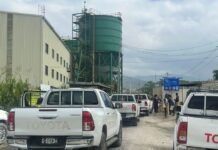

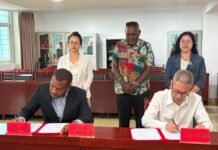


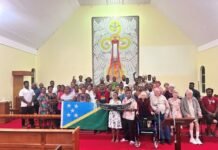
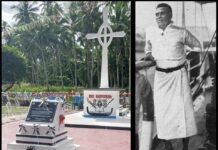



The Guadalcanal Provincial Government has moved to publicly affirm its position on the disputed Levers Solomons Limited (LSL) land areas covering Lungga, Henderson and Tenaru, signalling that while it respects the authority of the courts, it will not stand aside from its responsibility to the people of Guadalcanal.
The statement comes in the wake of a landmark High Court ruling in April 2026, which found that the national government’s attempts to forfeit and compulsorily acquire LSL-held lands were “invalid, void and of no effect”, effectively a significant legal rebuke of the acquisition process set in motion in 2020.
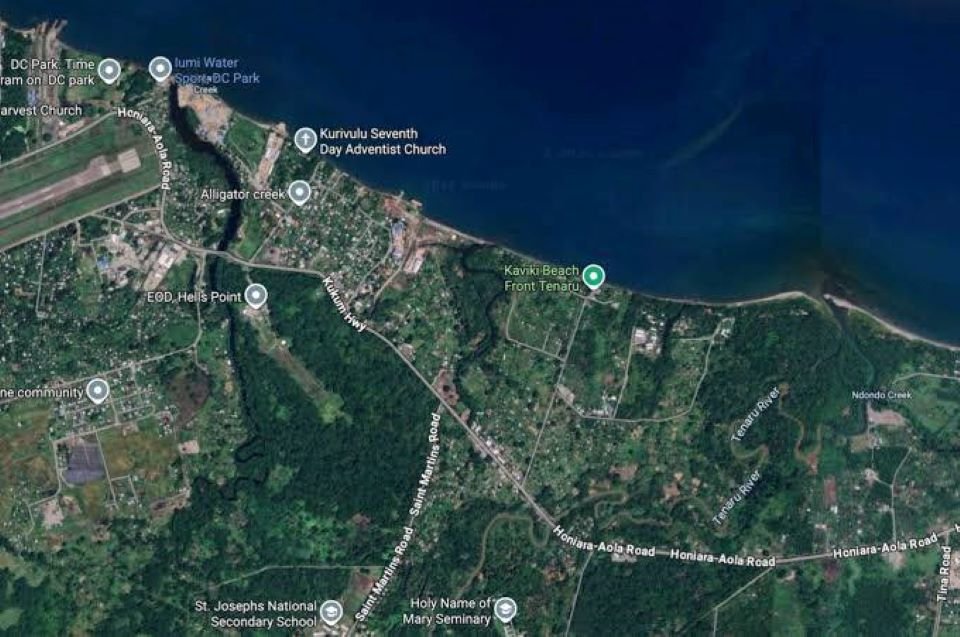
The Guadalcanal Provincial Government maintains that all land dealings in the province must comply with lawful procedures, illegal sales and occupations must be confronted, and future development across the Lungga–Henderson–Tenaru corridor must be well planned, coordinated and sustainable.
The areas of interest were held under Fixed Term Estates by Levers Solomons Limited (LSL) for over a century, originally for plantation and agricultural use. Over time, large portions fell into disuse, were informally occupied, or became subject to disputed transactions, setting the stage for one of Guadalcanal’s most sensitive and politically charged land matters.
In 2020, the Solomon Islands Government (SIG) moved to reclaim LSL-held lands through forfeiture and compulsory acquisition on grounds of non-development and public interest. That decision triggered years of High Court proceedings that culminated in the April ruling, one that found the government had failed to demonstrate the land was genuinely required for public purposes and had not satisfied proper legal and evidentiary requirements.
Despite the legal clarity, the situation on the ground remains deeply complex. GPG has flagged a series of pressing challenges that no court ruling alone can resolve.
Illegal land sales continue to trap desperate buyers who purchase disputed parcels without title verification, in some cases, the same land has changed hands multiple times over. Informal settlements are expanding without approved zoning, building permits, or environmental clearances in highly vulnerable WWII unexploded ordnance (UXO) areas, driven by relentless urban migration toward Honiara. This puts mounting pressure on GPG’s own monitoring capacity; manpower, mapping systems, and enforcement mechanisms are stretched well beyond what is needed to oversee the vast affected areas.
Beneath these practical concerns lies a deeper grievance by many indigenous Guadalcanal groups who continue to seek recognition of customary ownership claims rooted in the historical alienation of their land during the colonial era, expectations that remain unresolved and highly volatile if there are not properly addressed.
In direct response to these challenges, GPG has made clear that it will fully exercise planning and development control over all lands within the Lungga, Henderson and Tenaru areas through the Provincial Planning and Development Board. The Board will not grant development or building permits on land that is not legally registered. Anyone who proceeds to develop land not registered in their name does so illegally, at their own risk, and will face the full force of the province’s compliance mechanisms.
GPG has also called on any individuals or parties not legally owning land in the affected areas to immediately cease all land sales. Such transactions not only expose buyers to significant legal and financial harm but further destabilise an already fragile land environment.
At the same time, GPG has signalled its intention to engage directly with LSL at the earliest opportunity, seeking immediate consultation to discuss land sales, development control and other pressing issues pertaining to the Lungga, Henderson and Tenaru areas.
Consequent to these immediate measures, GPG has outlined a broader strategic agenda aimed at addressing the multifaceted issues surrounding the corridor. Central to this is a proposed joint land governance taskforce bringing together GPG, the Ministry of Lands, Honiara City Council, law enforcement, and customary landowner representatives to coordinate monitoring, enforcement and public awareness.
The province is also pushing for a comprehensive land audit and modern GIS mapping across all affected parcels, stronger development control ordinances, sustained public education on lawful land purchasing, and inclusive dialogue with customary landowners and tribal leaders.
Looking further ahead, GPG has called for a long-term regional spatial plan for the Lungga–Henderson–Tenaru corridor — an area it describes as rapidly becoming one of the most important urban and economic growth zones in Solomon Islands.