










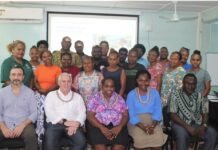



Honiara, Solomon Islands – The Ministry of Environment, Climate Change, Disaster Management and Meteorology (MECDM) recently convened an initial roundtable discussion with representatives from leading water bottling companies, government ministries, Honiara City Council (HCC), and local recycling businesses to address the growing environmental challenge posed by the improper disposal of large polyethylene terephthalate (PET) plastic bottles.
The meeting brought together key stakeholders to discuss collaborative solutions aimed at reducing plastic pollution and improving waste management practices across the Solomon Islands. During the discussion, MECDM officials presented data, photographs, and evidence highlighting the increasing impacts of plastic pollution on the environment. Participants were also briefed on relevant regulatory requirements and the urgent need for coordinated action to address the issue.
MECDM emphasized that active engagement with water bottling companies and other stakeholders is essential for developing practical and sustainable strategies to reduce plastic waste, improve recycling rates, and explore alternative packaging solutions.
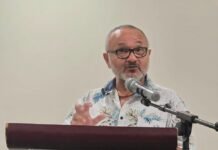
Speaking at the opening of the roundtable, MECDM Deputy Secretary Corporate, Mr. Karl Kuper, stressed the importance of collective action in tackling plastic pollution.
“The Ministry is working hard to address this issue, but it cannot do it alone. It requires collective collaboration from companies, stakeholders, and everyone involved. The Government also cannot solve this challenge on its own. Companies that produce these products must help develop solutions that will minimize the impact of PET bottle pollution,” said Mr. Kuper.
He further emphasized the need for all sectors of society to contribute to addressing the problem.
“It is time for all of us to work together to identify alternatives and solutions that will help reduce the impact of plastic pollution in our country. This is our problem, and only through cooperation among Government ministries, Honiara City Council, water bottling companies, the private sector, and consumers we can effectively address it,” he added.
Several key outcomes emerged from the meeting, including:
Establishment of a Joint Technical Working Committee (TWC)
Participants agreed to establish a Technical Working Committee to coordinate and advance initiatives aimed at addressing PET bottle pollution and strengthening collaboration among stakeholders.
Voluntary Industry Commitment to Plastic Pollution Awareness
Water bottling companies were encouraged to voluntarily support public awareness campaigns and explore opportunities to reduce the production and distribution of oversized PET bottles that contribute significantly to plastic waste.
Support for Investment in Local Recycling Capacity
Stakeholders discussed strengthening collection and recycling systems to ensure PET bottles are recovered, processed, and reused rather than discarded into the environment.
Establishment of Collection and Drop-Off Points
Agreement was reached to establish recycling collection cages at designated locations, providing convenient and accessible options for the public to responsibly dispose of empty plastic bottles.
Improved Data Collection and Information Sharing
Participants recognized the importance of collecting accurate data on existing recycling capacities and industry-led initiatives to support informed decision-making and future planning.
The meeting highlighted that addressing PET bottle pollution requires a coordinated effort involving government agencies, industry leaders, recycling companies, local authorities, communities, and consumers. Participating companies reaffirmed their commitment to working closely with government agencies, non-government organizations, and communities to support a cleaner and more sustainable future for the Solomon Islands.
The roundtable discussion was supported through the Pacific Ocean Litter Project (POLP), implemented by the Secretariat of the Pacific Regional Environment Programme (SPREP) and executed by the Ministry of Environment, Climate Change, Disaster Management and Meteorology.