


















BY CAMPION OHASIO – DIGITAL CREATOR
Why a tuck shop rule like ‘𝗳𝗶𝗿𝘀𝘁 𝗰𝗼𝗺𝗲, 𝗳𝗶𝗿𝘀𝘁 𝘀𝗲𝗿𝘃𝗲𝗱’ has no place in our mining laws.
Imagine you’re standing in a long line at a local bakery in Honiara. You wait patiently for your turn to buy a fresh loaf of bread. The rule there is very simple: first come, first served. The person who gets to the counter first gets the bread. It’s a fair and easy way to run a small shop.
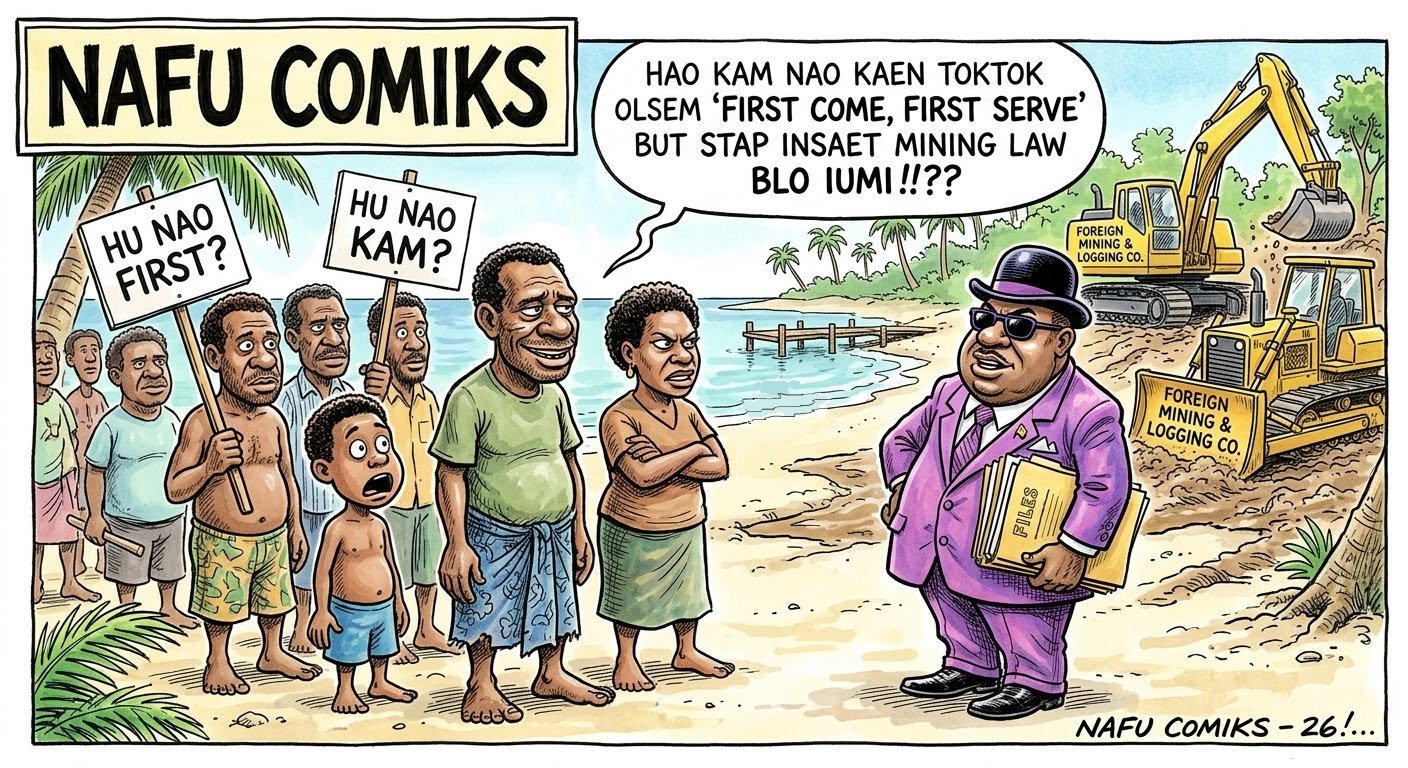
But what if I tell you that this exact same tuck shop rule is written into the mining laws of the Solomon Islands?
Yes, you read that right. In our national mining laws, there’s a concept known as ‘𝗳𝗶𝗿𝘀𝘁 𝗰𝗼𝗺𝗲, 𝗳𝗶𝗿𝘀𝘁 𝘀𝗲𝗿𝘃𝗲𝗱’. It means that if a foreign mining company runs into the government office in Honiara and files their paperwork first, they get the priority rights to explore and dig up the gold, nickel, or bauxite on customary land.
How on earth did such an idea find its way into our national laws? How can a foreign company get first priority over land they don’t own, just because they filled out a form first in the capital?
This is absolutely no sense in a country where over eighty percent of the land is held and owned by our tribal groups. This tuck shop rule completely ignores our culture, our traditional boundaries, and the absolute rights of our customary landowners.
𝗧𝗵𝗲 𝗖𝗹𝗮𝘀𝗵 𝗼𝗳 𝗧𝘄𝗼 𝗪𝗼𝗿𝗹𝗱𝘀
To understand how this happened, we have to look at the massive clash between two different systems. On one side, we have our ancient tribal system. For thousands of years, our tribes have held the land, the forests, and the rivers in perpetuity. Our land is our identity, our life, and our future.
On the other side, we have the Westminster legal system. This system loves paperwork, permits, and central offices in Honiara. Under the old laws, past governments treated 𝗰𝘂𝘀𝘁𝗼𝗺𝗮𝗿𝘆 𝗹𝗮𝗻𝗱 𝗮𝘀 𝗶𝗳 𝗶𝘁 𝘄𝗮𝘀 𝗷𝘂𝘀𝘁 𝗮 𝗯𝗹𝗮𝗻𝗸 𝗺𝗮𝗽 𝘄𝗮𝗶𝘁𝗶𝗻𝗴 𝗳𝗼𝗿 𝗛𝗼𝗻𝗶𝗮𝗿𝗮’𝘀 𝗮𝗽𝗽𝗿𝗼𝘃𝗮𝗹. They allowed foreign companies to bypass the tribes by securing priority rights under the ‘first come, first served’ rule.
We’ve already seen the bitter fruits of this lazy approach:
‘𝗥𝗲𝗻𝗯𝗲𝗹 𝗕𝗮𝘂𝘅𝗶𝘁𝗲:’ Where local landowners watched their rich red soil get scooped up and shipped away on giant foreign vessels, leaving behind ruined gardens and very little real development.
‘𝗜𝘀𝗮𝗯𝗲𝗹 𝗡𝗶𝗰𝗸𝗲𝗹:’ Where foreign claims and priority fights dragged tribal groups into endless, painful court battles that divided communities.
‘𝗚𝗼𝗹𝗱 𝗥𝗶𝗱𝗴𝗲:’ Where royal disputes, environmental scares, and constant shutdowns keep reminding us of what happens when we put Honiara’s paper deals before tribal interests.
These examples are loud warnings. They tell our tribal groups to be incredibly mindful when dealing with government officials and foreign mining bosses. They also remind the government that it has a sacred duty to protect the interest of the tribes, not the pockets of foreign companies.
𝗔 𝗕𝗼𝗹𝗱 𝗩𝗶𝘀𝗶𝗼𝗻 𝗳𝗼𝗿 𝗥𝗲𝗳𝗼𝗿𝗺.
This is why the current Government for Reform, Empowerment, Accountability, and Transformation (the GREAT Coalition) trying to do things completely differently is like a good breath of fresh air. In their policy statement, they explicitly recognize that our mineral wealth must stay in our country to benefit our own people.
They have laid out an exciting path to dismantle the old, unfair systems:
𝟭. ‘𝗦𝘁𝗮𝘁𝗲-𝗢𝘄𝗻𝗲𝗱 𝗠𝗶𝗻𝗶𝗻𝗴 𝗘𝗻𝘁𝗲𝗿𝗽𝗿𝗶𝘀𝗲𝘀:’ The government wants to set up a Mining State-Owned Enterprise and a Mineral Holdings State-Owned Enterprise. This means the country, alongside the land-owning tribes, will have a direct share in mining operations rather than just letting foreign middlemen take all the profits.
𝟮. ‘𝗚𝗼𝗹𝗱 𝗕𝘂𝘆𝗶𝗻𝗴 𝗦𝗰𝗵𝗲𝗺𝗲:’ They want to establish a central bank (CBSI) Gold Trading and Buying Scheme so that our gold is traded honestly and transparently.
𝟯. 𝗥𝗲𝘀𝗲𝗿𝘃𝗶𝗻𝗴 𝗔𝗹𝗹𝘂𝘃𝗶𝗮𝗹 𝗠𝗶𝗻𝗶𝗻𝗴 𝗳𝗼𝗿 𝗟𝗼𝗰𝗮𝗹𝘀:’ Crucially, the policy commits to reserving all alluvial gold mining exclusively for indigenous Solomon Islanders. This guarantees that our local youth and family groups can work their own resources and keep the returns in their villages.
𝗣𝘂𝘁𝘁𝗶𝗻𝗴 𝘁𝗵𝗲 𝗡𝗮𝘁𝗶𝗼𝗻 𝗙𝗶𝗿𝘀𝘁.
The ‘first come, first served’ rule is a lazy, outdated way of managing a country’s wealth. It treats our sacred tribal lands as if they are just items on a supermarket shelf.
If our leaders are truly serving the interest and good of the country, they must complete the legislative reforms outlined in the policy statement. We need a system where tribal consent is the very first step, not an afterthought.
Let us hope that our Members of Parliament can look past the current political game of musical chairs in Honiara. We don’t need more political instability that derails these vital reforms. Our future is not a game. It’s time to protect our customary wealth and ensure that the treasures of our land stay in the hands of the people who’ve owned them. GOD BLESS ALL OUR TRIBES.