







BY SHOREYANN RAGOSO
A recent Water, Sanitation and Hygiene (WASH) assessment in four villages in the northern region of Guadalcanal Province has found that people with disabilities are still facing major challenges in accessing safe water and proper sanitation.
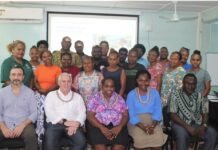
The assessment covered Bebe, Bubulu, Popoloi, and Tumurara villages and looked at water supply, sanitation coverage, disability inclusion, and climate impacts on local systems. While some improvements have been made, access remains uneven, especially for people with disabilities.
Survey teams identified 14 people with disabilities across the four villages. Tumurara had the highest number with nine people, followed by Popoloi with four and Bebe with two. The reported disabilities included mobility issues, difficulties with self-care, and communication challenges.

The report said many people with disabilities struggle to reach water sources that are far from their homes or located on rough ground. Because of this, some must rely on others for help, while others do not get enough water for daily needs like drinking, cooking, and washing.
“Access to water and sanitation should be available to everyone, regardless of physical ability,” the report said. It added that inclusive WASH services are important for health, dignity, and independence.
The assessment recommends that future projects be designed with accessibility in mind from the start. This includes building toilets with ramps and handrails, widening entrances, creating safe paths, and placing water points closer to homes with lowered taps.
It also calls for more support for people with disabilities and their caregivers, especially in areas where sanitation coverage is still incomplete or where households face financial or social barriers.

Community involvement was also highlighted as very important. The report urges that people with disabilities be included in planning and decision-making so that WASH facilities meet their real needs and no one is left out.
Regular monitoring is also needed, especially in Popoloi and Tumurara, where gaps remain. Village leaders and project teams are encouraged to continue working closely with households to maintain progress.
The report concludes that improving WASH services is not only about building more toilets or water points. It is about making sure every facility is safe, accessible, and usable for all people in the community, including those with disabilities.